
How to Start Walking When You’re Overweight and Out of Shape
If you’re trying to figure out how to start walking when you’re overweight and out of shape, the hardest part may not be knowing what to do.
It may be getting yourself to do anything at all.
I know because I’ve been there.
At my heaviest, I weighed 265 pounds, and even ordinary physical activities had become difficult. Getting up the stairs at home left me winded. Walking to get the mail felt like a chore. And mowing the yard? That was something I dreaded because everything seemed to take so much effort.
The physical exhaustion was only part of it.
Mentally, it was draining to realize that if I didn’t make a change, this could simply become my normal life.
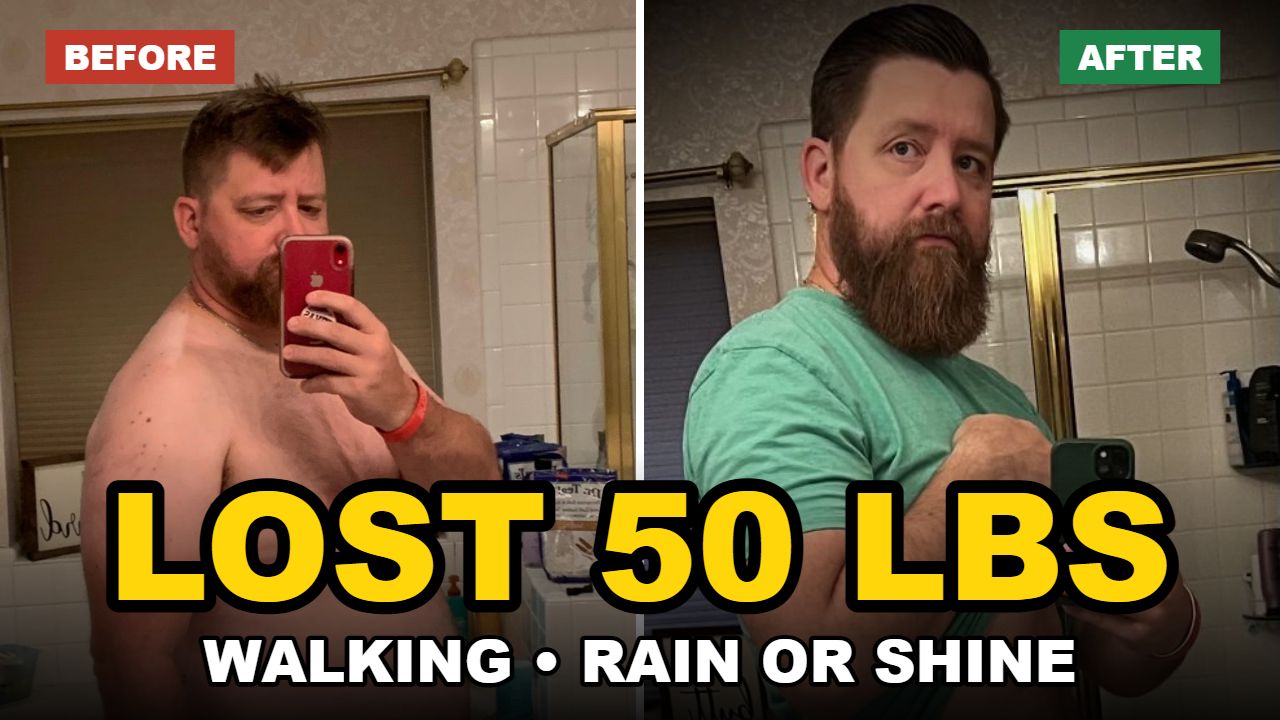
I eventually lost 50 pounds in six months, and walking played a foundational role in that transformation.
Walking wasn’t a magic solution. It wasn’t even the only thing I changed.
But it was where I started.
And if you’re currently overweight, sedentary, or seriously out of shape, I think walking can be one of the most realistic places to begin.
Quick answer (updated October 2026): If you’re overweight and out of shape, start with whatever walking you can do today, even 5 minutes, about three days a week. Add a few minutes each week at an easy pace where you can still talk, and slowly build toward the CDC’s goal of 150 minutes a week. Consistency matters far more than speed or distance at the start. Below is how I did it at 265 pounds, plus a simple 4-week beginner plan.
Table of Contents
You Don’t Have to Be Fit to Start Walking
One of the biggest mistakes people make is thinking they need to get into better shape before they start exercising.
I had that mindset too.
The truth is, you don’t have to be fit to start moving.
You just have to start from where you are.
When I started, I wasn’t walking five miles a day. I wasn’t running. I wasn’t doing some complicated workout program.
My first serious walk was about one mile.
And honestly, it was tough.
I walked slowly. It took me a while. But when I finished, I felt something I hadn’t felt in a long time:
Accomplishment.
And more importantly, I felt hope.
I remember thinking that maybe I could actually do this consistently.
That feeling mattered more than how fast I walked.
Why I Chose Walking
Walking wasn’t my first choice because I thought it was the perfect fat-burning exercise.
It was my first choice because it was realistically the only option I thought I could stick with.
I didn’t have money for a gym membership.
I hated running.
But I lived in a safe neighborhood, and there was a park nearby.
So I had everything I needed.
A pair of shoes.
A neighborhood.
A park.
And a decision to start.
You don’t need an expensive gym membership to begin becoming more active. The CDC specifically recommends starting slowly and building toward the recommended amount of weekly physical activity. It also notes that even smaller amounts of activity provide health benefits.
That’s important if you’re currently sedentary.
Don’t let the recommended 150 minutes per week convince you that anything less isn’t worth doing.
If you’re currently doing almost nothing, doing something is progress.
Start With Whatever You Can Actually Do
If you can comfortably walk for 30 minutes, great.
If you can walk for 15 minutes, that’s great too.
If five minutes is all you can manage right now, start there.
And if five minutes sounds like too much, start even smaller.
Walk to the door and back.
Walk around your yard.
Walk to the end of your street.
The goal at first isn’t to impress anyone.
It’s to establish the habit of moving.
The CDC‘s current guidance emphasizes that adults who sit less and engage in any amount of moderate or vigorous physical activity can gain health benefits.
So don’t make the mistake of comparing your beginning to someone else’s finished routine.
My rule: Move more than you do right now.
If you sit most of the day, move a little more. (Here are some easy ways to stay active with a sedentary job.)
If you currently average 5,000 steps, try gradually increasing that.
If you’re already walking regularly, gradually increase your time, distance, or pace.
You don’t have to transform your entire life on Monday morning.
You just need to move in the right direction.
My First Mistake Was Trying to Do Too Much
When I first started walking, I was in a hurry.
I felt an enormous sense of urgency.
I wanted to get as much weight off as quickly as possible, so I initially started walking every day.
The problem was that I eventually realized something important:
More isn’t always better if it causes you to burn out.
Instead of trying to destroy myself with exercise, I decided to commit to something I knew I could maintain:
At least three days a week, walking two miles at a somewhat moderate pace.
I wasn’t trying to set a speed record.
I was walking fast enough to work, but I could still carry on a conversation.
That was much more sustainable for me.
And something unexpected happened.
After about two weeks, I started enjoying it.
The Trick That Made Walking More Enjoyable
I started listening to podcasts while I walked.
That completely changed the experience for me.
Instead of thinking:
“I have to walk for two miles.”
I started thinking:
“I get to listen to my podcast.”
The time seemed to fly by.
This is one of the simplest things I’d recommend if you’re struggling to make walking a habit.
Pair your walk with something you enjoy.
Listen to:
- Podcasts
- Audiobooks
- Music
- Your favorite playlist
- A phone call with a friend or family member
Just make sure you’re staying aware of your surroundings and walking safely.
The CDC also recommends choosing physical activities that you enjoy and that match your abilities because that can make it easier to stick with them.
For me, podcasts turned walking from something I had to force myself to do into something I actually looked forward to.
Don’t Make the Scale Your Only Measure of Progress
This was another lesson I had to learn.
I expected results immediately.
If the scale went up, even temporarily, I got frustrated.
If I couldn’t walk as far or as fast one day, I felt like I was going backward.
That’s a terrible way to judge a new fitness routine.
Your body isn’t going to change in a perfectly straight line.
And your performance isn’t going to be identical every day.
Some days you’re going to feel great.
Other days you’re going to feel tired.
Some days the scale will cooperate.
Other days it won’t.
That doesn’t mean your efforts aren’t working.
Look for the non-scale victories too.
For me, some of the first changes weren’t even about weight.
My mood improved after only a couple of days.
I started sleeping better.
After about a week, I noticed I was more focused at work.
I also wasn’t as interested in taking an afternoon nap.
Those changes gave me a reason to keep going while the bigger physical transformation was still taking place.
And there’s good reason not to dismiss those changes. The CDC notes that physical activity can help people feel better and sleep better, and that some benefits can occur soon after physical activity.
How Fast Should You Walk?
You don’t need to start with a fast pace.
In fact, if you’re significantly overweight and out of shape, trying to walk too fast too soon can make the entire experience miserable.
Start at a pace you can manage.
As your fitness improves, gradually increase your pace.
Eventually, you can work toward moderate-intensity walking. A simple way to think about moderate intensity is that you’re breathing harder and your heart rate is elevated, but you’re still able to talk.
That was basically the approach I used.
I wasn’t running.
I wasn’t gasping for air.
I was simply walking with enough purpose to make the walk meaningful.
If you want to go deeper on pace, heart rate, and how walking actually helps with fat loss, I cover that in Walking for Fat Loss.
What If You Can’t Walk Two Miles?
Then don’t walk two miles.
Seriously.
That’s one of the biggest things I want someone reading this to understand.
You don’t need to follow my starting point.
My first walk happened to be about a mile.
Your starting point might be five minutes.
That’s okay.
Your goal is to make your current level slightly better over time.
Here’s an example of how a first month could look:
| Week | How long | How often |
|---|---|---|
| Week 1 | 5–10 minutes | 3 days |
| Week 2 | 10–15 minutes | 3 days |
| Week 3 | 15–20 minutes | 3–4 days |
| Week 4 | 20–30 minutes (if your body is handling it well) | 3–4 days |
That’s only an example—not a requirement.
You can stay at one level longer if you need to.
You can also start below this if necessary.
The important thing is that the routine is appropriate for your current ability.
The CDC recommends starting slowly and building toward 150 minutes of moderate activity per week rather than expecting an inactive person to immediately hit the full target.
Consistency Is More Important Than Your Results at the Beginning
If there’s one thing I wish somebody had told me before my first walk, it’s this:
Consistency is much more important than results at the beginning.
Your body needs time to adapt.
Your fitness needs time to improve.
Your weight needs time to change.
Don’t walk for three days and get discouraged because you haven’t transformed your body.
Don’t step on the scale one morning, see a higher number, and decide walking isn’t working.
Don’t miss one workout and decide you’ve failed.
Give yourself time.
The goal is to become someone who keeps showing up.
That’s what eventually changed everything for me.
Walking Doesn’t Have to Be Your Final Destination
For me, walking was a stepping stone.
But it was a foundational one.
As I became healthier and fitter, I eventually incorporated other forms of exercise into my routine.
But walking never disappeared.
It’s still an everyday staple of my fitness.
The funny thing is that I don’t look at it the same way anymore.
When I first started walking, it was something I felt like I had to do.
Now I genuinely enjoy it.
Sometimes I use walking to unwind.
Sometimes I listen to something.
And sometimes I simply walk and connect with nature.
Something that once felt like a chore became something I actually look forward to.
Once regular walks start to feel easy, a weighted vest is one simple way to make them more challenging without running. When you’re ready for that, here’s how I’d ease into it: Walking With a Weighted Vest: How Heavy to Go and a 6-Week Beginner Plan.
My Simple Advice: How to Start Walking When You’re Overweight
If you’re sitting there right now thinking:
“I know I need to exercise, but I’m too out of shape to start.”
Here’s what I’d tell you.
Don’t worry about becoming fit.
Don’t worry about walking fast.
Don’t worry about walking two miles.
Don’t worry about what anyone else is doing.
And don’t worry about getting perfect results immediately.
Just move more than you’re moving right now.
If you sit all day, get up and walk around the house.
If you can walk five minutes, walk five minutes.
If you’re already doing 5,000 steps, try gradually increasing that.
If you can comfortably walk 30 minutes, keep building your routine.
Your starting point doesn’t matter nearly as much as your willingness to keep moving forward.
The Goal Isn’t to Have the Perfect Walking Workout
When I look back at my weight-loss journey, I don’t think the most important thing was that I walked exactly a certain distance or burned a certain number of calories.
The important thing was that walking gave me a way to start changing my life when I desperately needed to.
I went from struggling with stairs, the mailbox, and mowing the yard to losing 50 pounds in six months.
Walking was a catalyst.
But consistency was what allowed the catalyst to become a lifestyle.
And that’s what I think is most important for someone starting today.
You don’t need to become a completely different person tomorrow.
Just take the first step.
Then take another one tomorrow.
And keep going.
A Note About Your Health
If you’ve been inactive for a long time, have a chronic health condition, have significant mobility limitations, or are unsure what level of activity is appropriate for you, talk with your healthcare professional before starting or significantly increasing exercise. The CDC specifically recommends discussing appropriate activity with a healthcare professional in certain circumstances, including chronic conditions and vigorous activity after a period of inactivity.
This article describes my personal experience and isn’t a substitute for individualized medical advice.
Frequently Asked Questions
How do I start walking if I’m very overweight?
Start with an amount of walking that you can safely manage today, even if that’s only a few minutes. Focus on gradually doing more rather than trying to match someone else’s routine.
How long should an overweight beginner walk?
There’s no single starting duration that works for everyone. Start with a manageable amount and gradually increase your walking time. The long-term federal guideline for adults is at least 150 minutes of moderate-intensity activity per week, but you don’t have to reach that amount immediately.
Is walking enough to lose weight?
Walking can contribute to weight loss by increasing physical activity, but weight loss generally involves both physical activity and eating patterns. The CDC notes that people may need more activity for weight management and that combining regular physical activity with healthy eating supports weight loss and maintenance. That’s why I paired walking with simple portion control. My free hand-portion guide shows the easy way I did it, and my realistic 4-week weight-loss plan puts walking and eating together.
Should I walk every day to lose weight?
You don’t necessarily have to walk every day. I initially walked every day because I felt an urgency to lose weight, but I eventually found that committing to at least three days per week was more sustainable for me.
The best routine is one you can consistently maintain while allowing your body appropriate recovery.
What if walking hurts?
Don’t assume pain is something you simply need to push through. Reduce the intensity or duration and consider talking with a healthcare professional, particularly if you have an underlying condition or significant pain.
How do I stay motivated to walk?
Make walking something you enjoy rather than something you punish yourself with. For me, listening to podcasts made a huge difference. You could also listen to music, audiobooks, walk with someone, or choose a pleasant route.
Final Thought
If you’re where I was when I started, I know how intimidating exercise can feel.
But your first walk doesn’t need to be impressive.
Mine wasn’t.
It was slow.
It was difficult.
It was only about a mile.
But I finished it.
And that first mile gave me something I desperately needed:
hope.
You don’t have to know exactly how you’re going to lose all the weight.
You don’t have to know what your final workout routine will look like.
You just need to figure out how to take your first step.
Then keep taking them.
Want Help With the Eating Side Too?
Walking got me moving, but simple portion control is what made the weight come off. Grab my free hand-portion guide: no food scale, no counting, just your hand.





2 Comments