
How to Lose 10 Pounds in a Month: What Actually Worked for Me
I lost about 20 pounds in my first month, while working two jobs and raising four kids. I didn’t starve myself, and I didn’t live in a gym. I mostly walked, cut way back on snacking, and tracked everything I ate. Here’s exactly what that month looked like, what I’d do differently, and how you can do the same.
Quick answer (updated October 2026): Yes, losing 10 pounds in a month is realistic for most people with weight to lose, without crash dieting. Expect about 3–5 pounds of water weight in the first week, then 1–2 pounds of fat a week after that. That adds up to roughly 8–11 pounds. The formula is simple: track everything you eat, eat in a moderate calorie deficit, cut back on snacking, and move a little more.
Free printable: Get my Portion Control Cheat Sheet. Eyeball the right amount at any meal, with no scale and no counting. It includes a fridge chart, eating-out guide and wallet cards. Send it to me
I’m Brett, a busy dad and certified nutrition coach who lost 50 pounds by keeping things simple. Here’s exactly how I’d approach a 10-pound month.
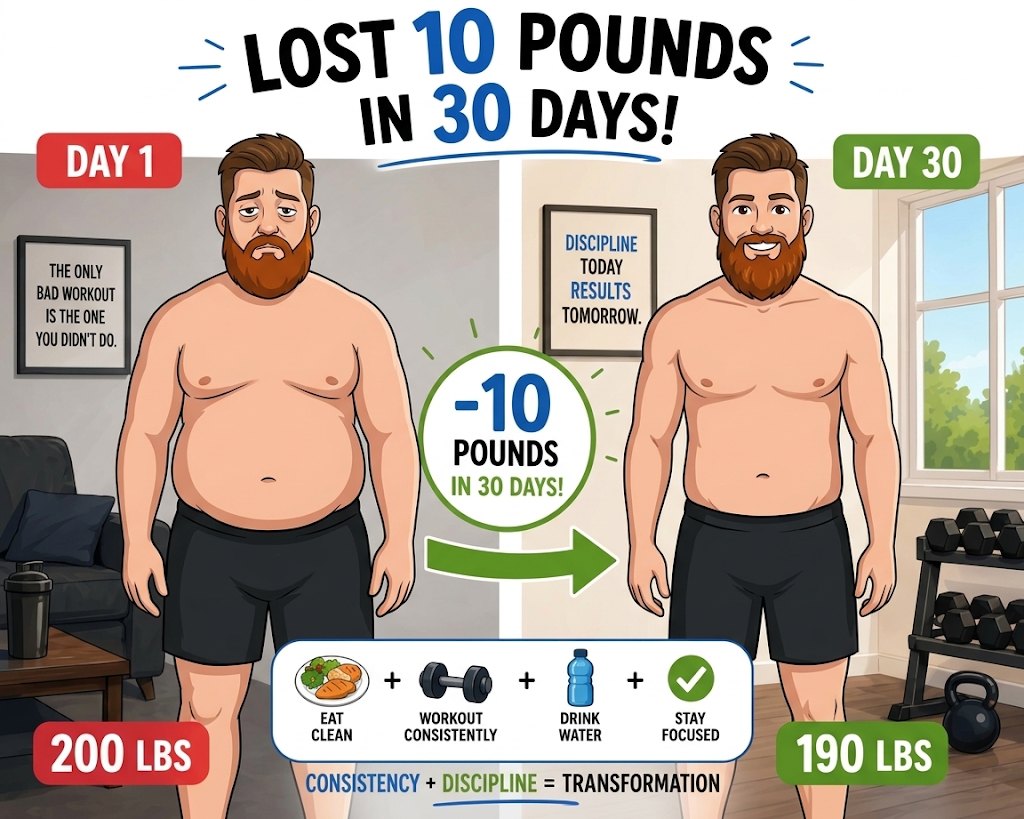
Key Takeaways: How to Lose 10 Pounds in a Month
- Most people with weight to lose can lose 10 pounds in a month: about 3–5 lbs of water in week 1, then 1–2 lbs of fat a week (roughly 8–11 lbs total).
- A daily deficit of about 500–1,000 calories covers the fat-loss part. You don’t need to starve yourself.
- Track everything you eat for a couple of days first, then find your numbers with a calorie calculator.
- Cutting back on snacking was my biggest change, and walking was almost all of my exercise.
- Add some resistance training early so you keep more muscle while you lose fat.
Table of Contents
My First Month: What Losing 20 Pounds Actually Looked Like
In my first month I lost about 20 pounds. The first week was the exciting part: I dropped about 8–10 pounds. After that, it slowed down to a few pounds a week. I started at 265 pounds, so I had a lot to lose, and that’s why mine came off faster than the typical numbers below. Most people should expect closer to 8–11 pounds in a month. That first week was a huge motivator, and the slower weeks after it were honestly hard to take.
The hardest moment wasn’t a craving. It was realizing this wasn’t going to happen overnight. I also had a few headaches from cutting out soda. What kept me going was that I had more energy almost right away, and I needed to lose the weight for my family.
Why the First Week Drops So Fast (and Then Slows Down)
That big first week was mostly water. Your body stores carbs as glycogen, and glycogen is stored with about three to four parts water (Kreitzman et al., 1992). When you cut calories and carbs, you burn through some of that stored glycogen, and the water goes with it.
That’s why I call 10 pounds in a month reasonable, not extreme. The CDC says people who lose about 1 to 2 pounds a week are more likely to keep it off, and that pace describes steady fat loss after the first-week water drop. Add it up:
- Week 1: 3–5 pounds (mostly water, plus some fat)
- Weeks 2–4: 1–2 pounds of fat per week
- Total: about 8–11 pounds
So if week two only shows a pound and a half, nothing is wrong. That’s what real fat loss looks like.
The Math: How Big a Calorie Deficit You Need
A pound of fat is roughly 3,500 calories. That’s an estimate, not an exact rule (Thomas et al., 2013), but it’s close enough to plan with. You don’t need a 1,250-calorie daily deficit to hit 10 pounds, because the first-week water drop does part of the work. For the fat-loss part, a deficit of about 500 to 1,000 calories a day covers 1–2 pounds a week.
That’s why you don’t have to starve yourself or work out 5–7 days a week. A moderate cut plus a little extra movement gets you there.
Step 1: Know What You’re Eating (Track Everything)
The first thing I tell everyone is: know what you’re consuming. I used MyFitnessPal at first, then switched to Cronometer, which I still use today. I tracked calories and macros, and it showed me how much I was really overeating.
The research backs this up. A review of 39 weight-loss studies found that more consistent digital tracking was linked to more weight loss in about three out of four cases (Patel et al., 2021).
- Track everything for a couple of days, including drinks, snacks, and bites off your kids’ plates.
- Don’t change anything yet. Just see where you are.
- Then use those numbers in step 2.
Step 2: Find Your Numbers
Next, find your daily energy expenditure (how many calories you burn) and what you need to eat to gain, maintain, or lose weight. My free calorie calculator does this in about a minute. Eat in the “lose weight” range and you’re golden.
If you want to go a step further and set your protein, carbs, and fat, I walk through it in Calorie Deficit & Macros: The Complete Fat Loss Framework.
Step 3: Cut Back on Snacking (My Biggest Change)
My biggest change was snacking. Before, I snacked on chips, candy, ice cream, donuts, cookies, and soda. I cut snacking way down, and when I did snack, it was almost always something healthy and low calorie.
My Go-To Low-Calorie Snacks
- Popcorn (Smart Pop)
- Pretzels
- Yogurt
- Protein bars (David and Barebells are my favorites)
- Protein chips (Quest)
I share more ideas in my best high-protein snacks post. And if you drink a lot of soda like I did, expect a few headaches when you cut it out. For me, the extra energy was worth it.
Step 4: Move a Little More (You Don’t Need a Gym)
My exercise that first month was almost all walking. I did very little running or lifting, and I mixed in some resistance band work, but nothing drastic. With four kids and two jobs, I didn’t want to add anything that would make my schedule harder to keep.
Walking is enough to get started. If you’re not sure how much, I break it down in how much you should walk a day to lose weight. If walking feels hard right now, start with how to start walking when you’re overweight.
What I’d Do Differently: Add Resistance Training Sooner
If I did that first month again, I’d add more resistance training from the start. I lost some muscle in those early weeks and had to rebuild it later.
Research supports this. A 2026 review of randomized trials found that adding exercise to a calorie deficit prevented nearly half of the lean-mass loss seen with dieting alone, and strength training looked especially helpful (Deller et al., 2026).
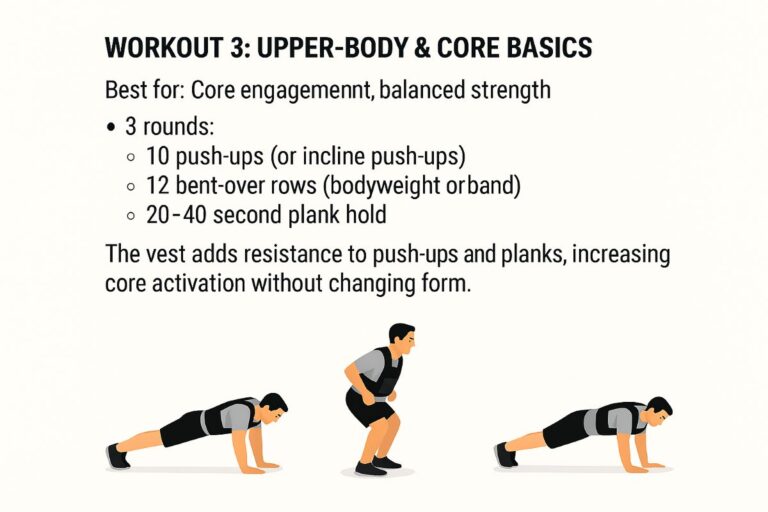
You don’t need a gym for this. Two short sessions a week with bands, bodyweight moves, or a weighted vest is plenty to start. Here are some simple beginner weighted vest workouts you can do at home.
The Biggest Mistake: Going Too Hard Too Fast
Most people go too hard at first and burn out. They slash calories, start working out every day, and quit by week three. The month that works is the one you can actually repeat.
I’ve given friends and family this same advice, and the ones who stuck with it saw the same kind of results I did.
A Realistic 4-Week Timeline
| Week | Expected loss | What’s happening |
|---|---|---|
| Week 1 | 3–5 lbs | Mostly water as your glycogen stores drop. I lost about 8–10 this week, starting at 265. |
| Week 2 | 1–2 lbs | The scale slows down. This is real fat loss, so keep going. |
| Week 3 | 1–2 lbs | Cravings start to ease and your new habits feel more normal. |
| Week 4 | 1–2 lbs | Stay consistent and you land around 8–11 pounds for the month. |
Losing 10 Pounds in a Month: Your Questions Answered
Can you lose 10 pounds in a month?
Yes. With a moderate calorie deficit and more walking, most people with weight to lose can get there: about 3–5 pounds of water in week one, then 1–2 pounds of fat a week. I lost about 20 in my first month, but I started at 265, so most people should expect less.
Is it safe to lose 10 pounds in a month?
For most adults with weight to lose, yes, as long as you get there with a moderate deficit and not by starving yourself. The CDC’s 1–2 pounds a week describes fat loss after the first-week water drop. If you have a medical condition or take medication, check with your doctor first. I’m a nutrition coach, not a doctor.
Can you lose 10 pounds of fat in a month?
Usually not all of it. Much of the first week is water, so a 10-pound month is usually more like 5–8 pounds of fat. That’s still a great month.
How many calories should I eat to lose 10 pounds in a month?
Find your maintenance calories with my calorie calculator, then eat about 500–1,000 calories below it. Don’t go below the calculator’s “lose weight” range.
How much should I walk a day to lose 10 pounds in a month?
Walking was almost all I did my first month. Work up to 30–45 minutes of brisk walking most days, or about 7,000–9,000 steps. More details in how much to walk a day to lose weight.
How do I lose 10 pounds in a month naturally?
No pills, cleanses, or detox teas. Track what you eat, cut back on snacking and soda, eat enough protein, and walk every day. That’s what worked for me.
My 3 Steps to Start Tomorrow
If you’re a busy parent who wants to lose 10 pounds starting tomorrow, here’s exactly what I’d tell you:
- Know what you’re consuming. Track everything you eat and drink for a couple of days to see where you are.
- Find your numbers. Figure out your daily expenditure and what you need to eat to lose. Eat in that range and you’re golden.
- Move just a bit more. A daily walk is enough to start.
That’s it. Keep it simple, stay consistent, and treat this month as the start, not the finish line.
Keep Reading
- Simple Weight Loss Plan That Actually Works
- Fastest Way to Lose Weight for Beginners
- My Weight Loss Story
- Weight Loss for Busy Dads: Where to Start
- Healthy Fast Food: What I Order at Chipotle, Taco Bell and Chick-fil-A
- Calorie Deficit & Macros: The Complete Fat Loss Framework
Want an easy way to control portions without counting? My guide to portion sizes using your hand shows you how to size any meal using just your palm, fist, cupped hand and thumb.





6 Comments