Weighted Vest on a Treadmill: How I Do It (Speed, Incline & Tips)
Most nights, my workout happens after work, on my treadmill, with a weighted vest on. I’m a busy dad of four with two jobs, so that’s usually the only time I have. Here’s exactly how I do it: the vest weight, speed and incline I use, what I’d warn you about, and the mistake I see most.
Quick answer (updated November 2026): Yes, walking on a treadmill with a weighted vest is a simple way to make a short walk work harder. As a certified nutrition coach who lost 50 lbs mostly by walking, I wear a 12–15 lb vest for 20–30 minutes at 3 mph and a 5–7% incline, hands-free. Start light and check with your doctor first.
This post contains affiliate links. If you buy through them, I may earn a small commission at no extra cost to you. I only recommend things I’d tell a friend about.
Table of Contents
My Weighted Vest Treadmill Workout
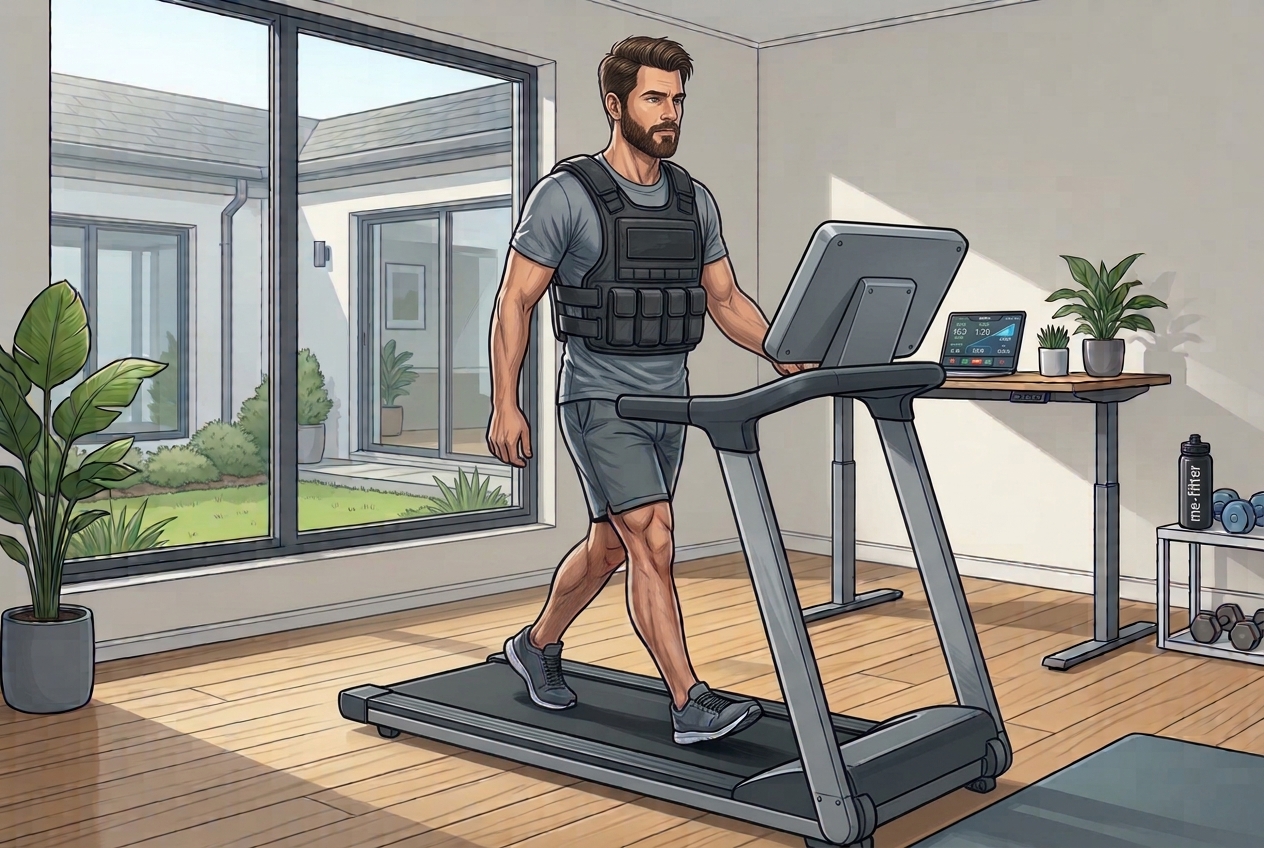
My routine is simple and the same almost every time:
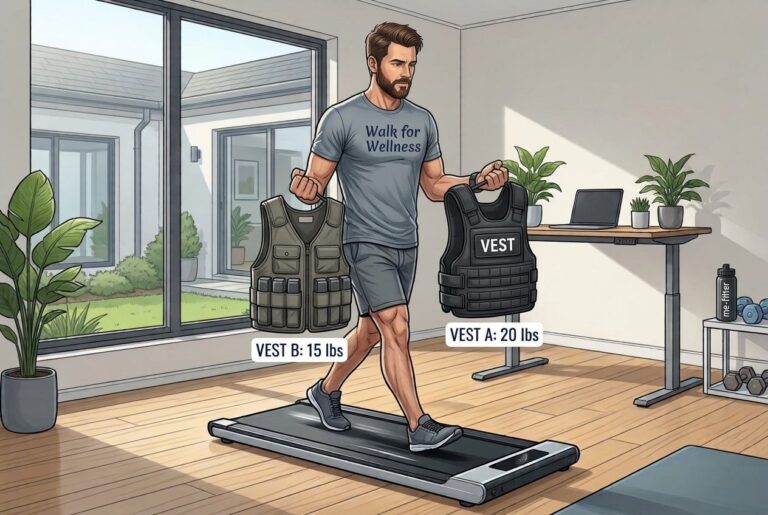
- Vest: my adjustable sandbag vest from Temu at 12–15 lbs, or my 12 lb ZELUS when I want something lighter, quicker and more comfortable
- Time: 20–30 minutes
- Speed: 3 mph
- Incline: 5–7%
- Hands: free, no holding the rails
- When: after work, because that’s usually the only time I have
That’s it. No intervals, no complicated plan. The vest and the incline do the work, and I just keep walking.
Does a Weighted Vest on a Treadmill Burn More Calories?
Yes, a bit more, but not dramatically more. In a small ACE study, people walking at 2.5 mph with a vest equal to about 15% of their body weight burned about 12% more calories than without one. On a 5–10% incline, a lighter vest (about 10% of body weight) gave a similar boost of about 13%, and a heavier vest didn’t add much on top of the incline.
Keep that in perspective: it was 13 untrained women walking for short stages, so it’s a useful clue, not the final word. For me, the bigger win isn’t a few extra calories per walk. It’s that a vest plus an incline makes 20–30 minutes feel like a real workout, which makes it easier to show up every day. That consistency is what helped me lose weight. If you’re wondering how much walking it takes overall, see how much I’d walk a day to lose weight.
Treadmill vs. Walking Outside With a Vest
The treadmill is a little harder for me. Outside, the hills come and go. On the treadmill, the incline is set and it never lets up, so every minute takes steady effort. That’s exactly why I like it after work: I know what I’m getting, and I don’t have to plan a route.
If you like walking outside too, my full guide to walking with a weighted vest covers that, plus a 6-week plan.
How Heavy Should Your Vest Be on a Treadmill?
Start with about 5% of your body weight and work up toward 10%. For walking, that’s plenty. My usual 12–15 lbs lands right in that range for me. On a treadmill you’re adding an incline on top of the vest, so starting light matters even more. Here’s my simple chart by body weight.
Speed and Incline: Where to Start
Start flat and slow, then add incline before you add speed. This is how I’d ease in:
- Walk with the vest at 0% incline at a pace you can talk at, for as long as feels comfortable.
- Add time before anything else. Aim for 20–30 minutes.
- Then add incline in small steps until you reach something like my 5–7%.
- Only then think about a heavier vest. I still bump my weight up only once in a while.
The researchers in that ACE study also suggested beginners stay under a 15% incline for the first several weeks, because too much too soon can make people quit. I’ve never needed more than 7%.
Hands-Free or Hold the Rails?
I always walk hands-free. I rely on my legs to keep my balance, and that’s part of how it makes them stronger. Holding the rails takes some of the work away from your legs. If you need the rails to stay steady, that’s a sign to lower the incline, the speed or the vest weight until you can walk without them.
The Biggest Mistake I See
Walking too fast for too short a time. People crank up the speed, last a few minutes and call it done. With a vest, longer is better: more minutes and more steps at a steady pace beat a short, rushed walk. If you have to choose, slow down and stay on longer.
What Changed for Me
It gets easier with time. I notice I’m getting stronger because every so often I have to add weight to the vest to keep it challenging. That slow progress is a good sign, and it’s what I’d watch for instead of the scale every day.
Safety: Shoulders, Knees and Your Doctor
Shoulder soreness and knee soreness are real possibilities, especially if you start too heavy. Check with your doctor first, and that goes double if you have joint, back, heart or breathing problems. The ACE researchers noted that weighted vests may not be a good fit for people with arthritis, severe osteoporosis or COPD.
- Start light and adjust the vest so it sits snug and doesn’t bounce.
- Stop if you feel sharp pain in your neck, shoulders, back or knees.
- Add one thing at a time: time, then incline, then weight.
For more, see is a weighted vest safe?, where I cover back, knee and posture concerns.
The Gear I Use
| Gear | What it is | Why I use it |
|---|---|---|
| Adjustable sandbag vest (Temu) | Adjustable, I keep it at 12–15 lbs | My usual treadmill vest; I add weight as I get stronger |
| ZELUS Weighted Vest (12 lb) | Fixed weight | Lighter, quicker and more comfortable option |
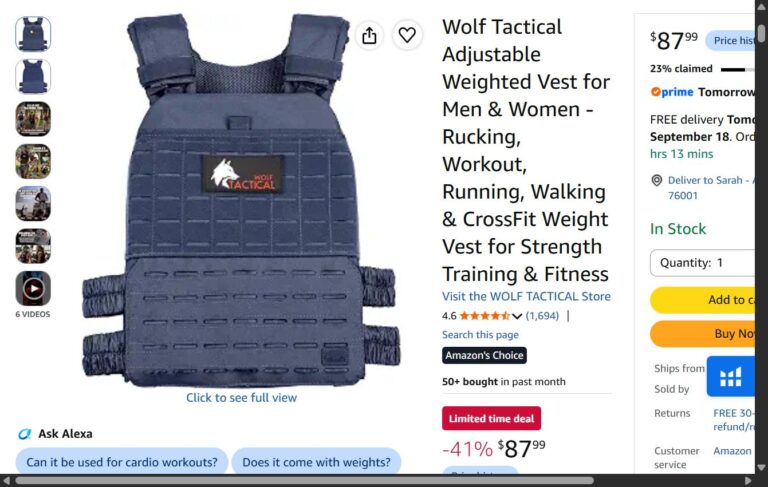
| ZELUS Adjustable Weighted Vest | Adjustable with removable weights | The one I’d point a beginner to (I haven’t worn it myself) |
| ProForm treadmill (from Walmart) | Home treadmill with incline | Does the job; I like it just fine |
My fixed 12 lb ZELUS is comfortable, but you can’t change its weight. If you’re buying your first vest, I’d go adjustable so you can start light and grow into it.
Check the price of the ZELUS Weighted Vest on Amazon
Check the price of the ZELUS Adjustable Vest on Amazon
Weighted Vest Treadmill FAQ
Can you wear a weighted vest on a treadmill?
Yes. Start light, at about 5% of your body weight, at a slow pace and little or no incline. Wear it snug so it doesn’t bounce, and walk hands-free once you feel steady.
Is it better to walk with a weighted vest on a treadmill or outside?
Both work. For me the treadmill is a little harder because the incline stays set the whole time, and it’s easier to fit in after work. Outside gives you fresh air and changing terrain.
What incline should I use with a weighted vest?
Start at 0% and add incline slowly. I use 5–7% at 3 mph. Researchers in an ACE study suggested beginners stay under 15% for the first several weeks.
How long should I walk with a weighted vest on a treadmill?
I walk 20–30 minutes. Longer at a steady pace beats a short, fast walk, so build up time before you add speed or weight.
Should I hold the handrails?
I don’t. Walking hands-free makes your legs do the balancing. If you need the rails, lower the incline, speed or vest weight.
Final Thoughts
If a busy parent asked me whether they should wear a weighted vest on their treadmill, my answer is: absolutely! It can benefit you in so many ways. Start light, walk longer instead of faster, keep your hands off the rails, and add weight only when it starts to feel easy.
Want a plan to follow? My 6-week beginner weighted vest walking plan walks you through it week by week. And if you’re ready for more structure, take a look at Walk It Off.