
Over time, I found that beginner weighted vest workouts don’t need to be complicated to be effective. The exercises below focus on everyday movement patterns that build strength, improve conditioning, and support fat loss without overwhelming beginners or increasing injury risk.
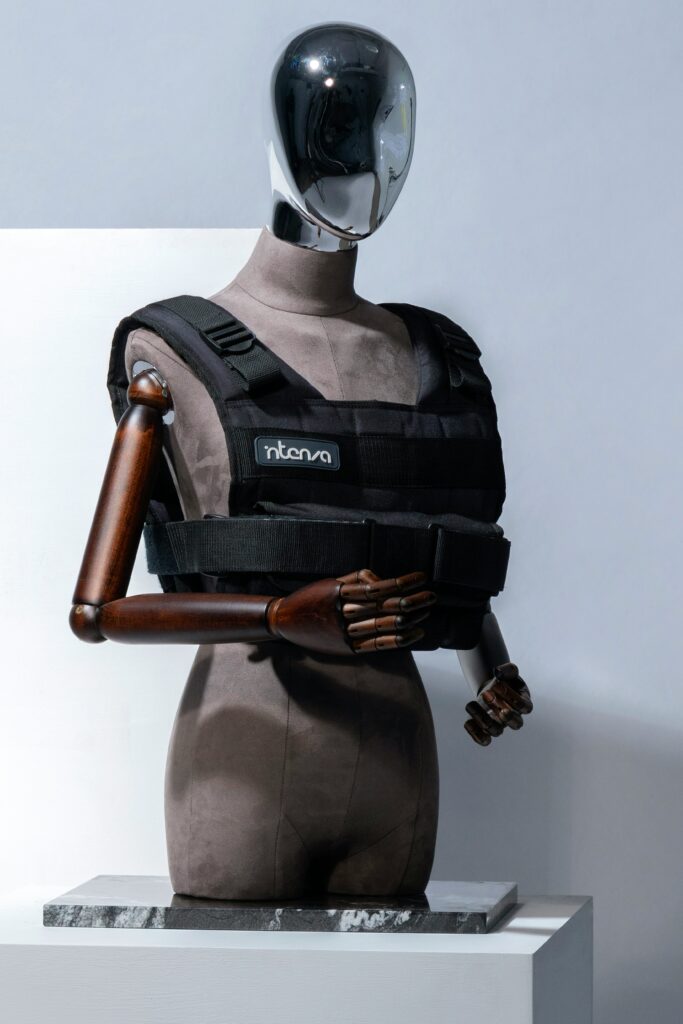
When I first started using a weighted vest, I made the mistake most beginners make—doing too much, too fast. A weighted vest isn’t meant to turn every workout into a max‑effort session. Instead, it’s a tool that works best when combined with simple movements, good form, and consistency.
This guide covers simple weighted vest exercises, how to structure workouts, and how to get started safely.
Want more of an overview of weighted vest benefits? Here are the Weighted Vest Benefits: Walking, Fat Loss, and Strength
Here is a complete list of the Best Home Gym Equipment that I recommend.
Table of Contents
Why Weighted Vests Are Great for Beginners
Weighted vests allow beginners to:
- Progress gradually using familiar exercises
- Increase intensity without adding complex movements
- Build strength while improving cardiovascular fitness
- Keep workouts short, effective, and repeatable
Because the load is evenly distributed, most people find weighted vest workouts easier to manage than dumbbells or machines when starting out.
How Heavy Should a Beginner Weighted Vest Be?
For beginners:
- Start with 5–10% of body weight
- Focus on comfort and posture first
- Increase weight only after 2–3 weeks of consistent use
A lighter vest used consistently beats a heavy vest used inconsistently.
✅ Beginner Weighted Vest Workouts (Full‑Body Focus)
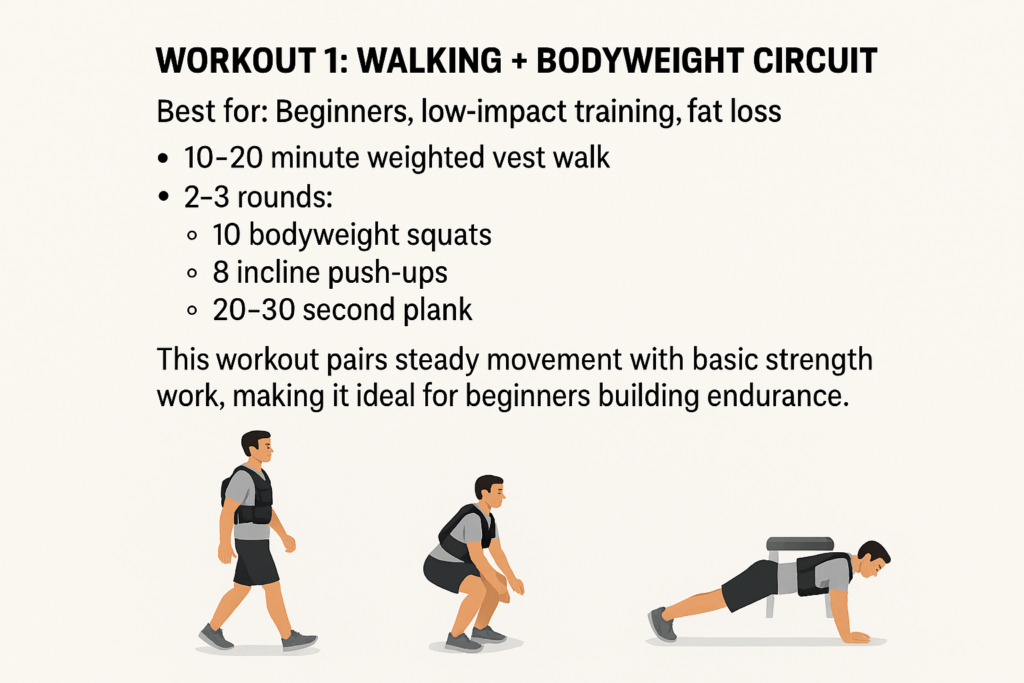
Workout 1: Walking + Bodyweight Circuit
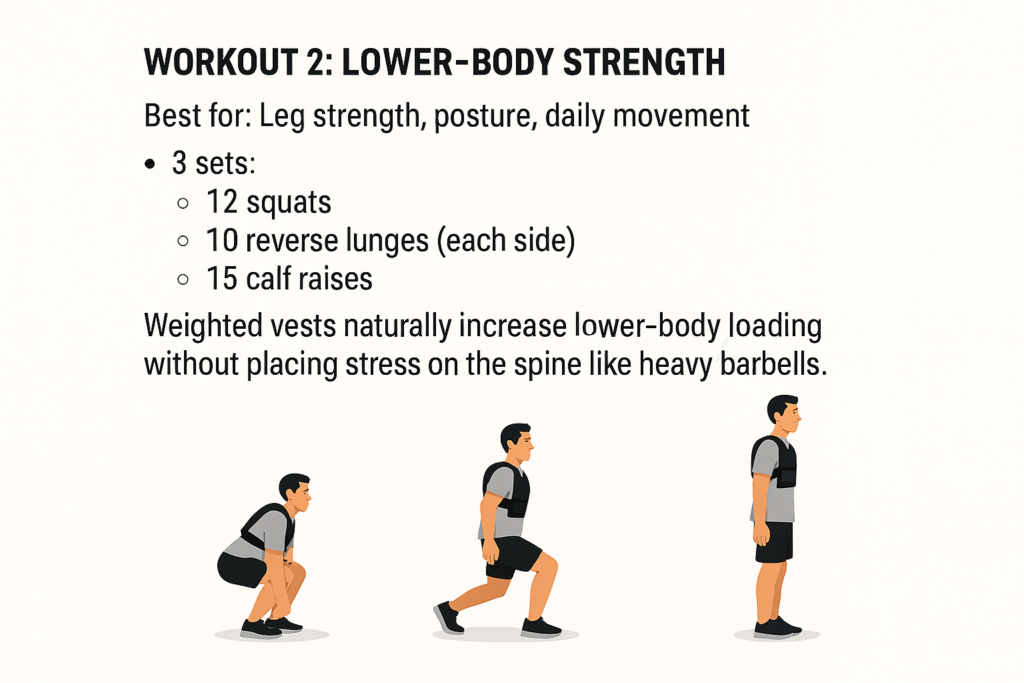
Workout 2: Lower-Body Strength
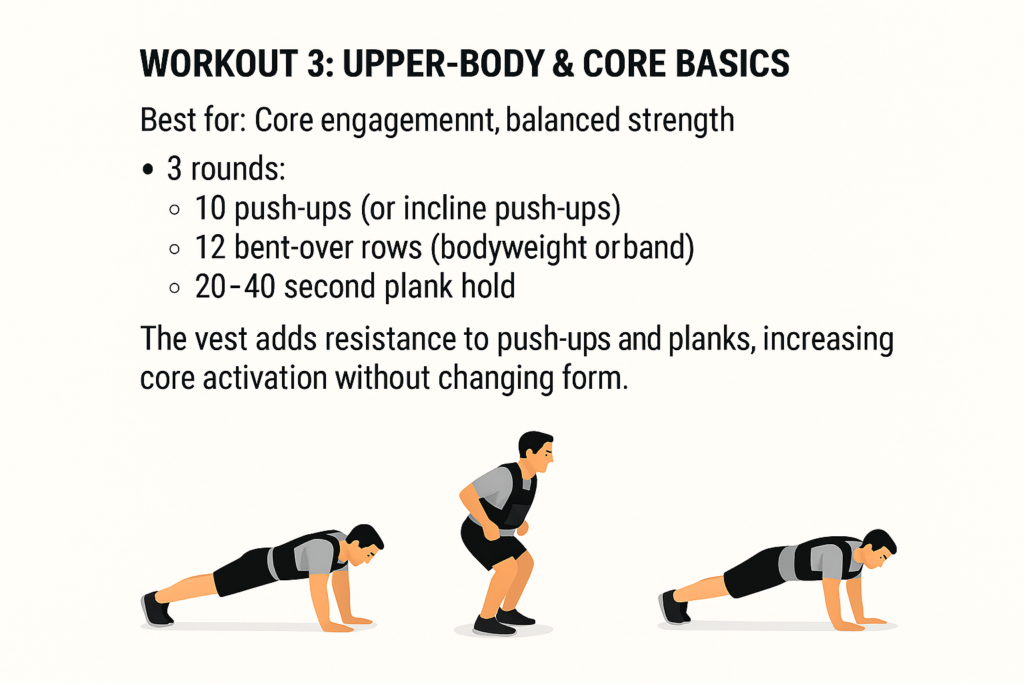
Workout 3: Upper-Body & Core Basics
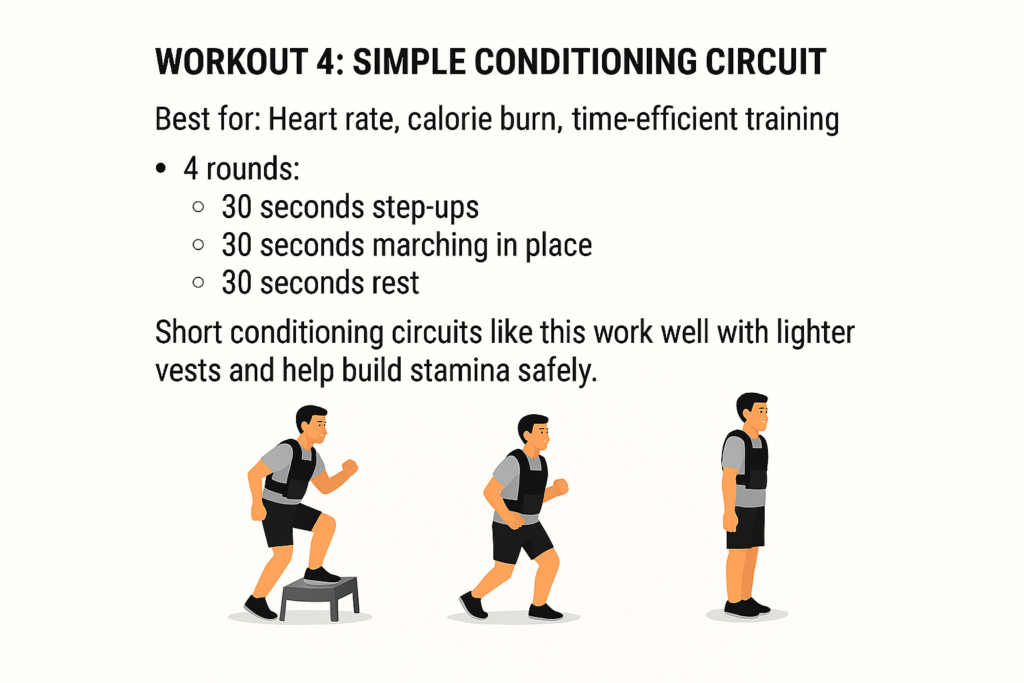
Workout 4: Simple Conditioning Circuit
How Often Should Beginners Do Weighted Vest Workouts?
A smart beginner schedule:
- ✅ 2–3 sessions per week
- ✅ Alternate workout days
- ✅ Avoid back‑to‑back loaded sessions early on
Progress comes from consistency, not exhaustion.
Common Beginner Mistakes to Avoid
- Starting too heavy too soon
- Using weighted vests for running immediately
- Ignoring posture during walking
- Treating every workout like HIIT
Weighted vest workouts are most effective when used as a progressive tool, not a punishment.
How Weighted Vest Workouts Fit Into a Bigger Plan
I’ve found that weighted vest exercises work best when paired with:
- Regular walking
- Simple strength routines
- Sustainable nutrition habits
They’re not meant to replace everything else—they enhance what you’re already doing.
If you’re ready to choose gear, I break down the best weighted vests for walking and beginner workouts based on comfort, adjustability, and real‑world use.
Are weighted vest workouts good for beginners?
Yes, weighted vest workouts are beginner‑friendly when started with light weight and simple exercises. Beginners benefit most by using a vest during walking, squats, push‑ups, and basic circuits while focusing on good posture and controlled movement before increasing load.
How heavy should a weighted vest be for beginners?
Beginners should start with a weighted vest that is about 5–10% of body weight. This allows the body to adapt safely while improving strength and conditioning. The weight can gradually increase after a few weeks of consistent, pain‑free training.
Can weighted vest workouts help with fat loss?
Weighted vest workouts can support fat loss by increasing calorie burn during walking and bodyweight exercises. The added resistance raises heart rate and energy expenditure without requiring longer or higher‑impact workouts, making them effective for sustainable, low‑stress fat‑loss routines.
What are the best weighted vest exercises for beginners?
The best beginner weighted vest exercises include walking, squats, lunges, step‑ups, push‑ups, and planks. These movements use natural patterns, build full‑body strength, and allow beginners to progress safely without complex techniques or excessive joint stress.
How often should beginners do weighted vest workouts?
Beginners should perform weighted vest workouts 2–3 times per week, allowing rest days between sessions. This frequency supports adaptation and recovery while reducing the risk of overuse injuries, especially when combining weighted vest training with walking or basic strength exercises.
Is it safe to walk every day with a weighted vest?
Walking daily with a weighted vest can be safe if the weight is light, posture is maintained, and sessions are moderate in length. Beginners should avoid wearing a vest all day and gradually build duration to prevent joint or lower‑back discomfort.
Should beginners use weighted vests for running?
Running with a weighted vest is not recommended for beginners. The increased impact and loading can stress joints and connective tissue. Beginners should focus on walking and strength‑based weighted vest exercises before considering higher‑impact activities.
Final Thoughts: Are Weighted Vest Workouts Good for Beginners?
Yes — when done correctly. The best weighted vest workouts for beginners focus on simple movements, moderate loads, and steady progress. Walking, bodyweight exercises, and short circuits provide plenty of challenge without unnecessary risk.
If you’re looking for a way to increase workout intensity while keeping things simple, weighted vest training is one of the most beginner‑friendly options available.