
Best Weighted Vest Workouts for Beginners (2026): 4 Simple Routines I Use
I’m a busy dad of four with two jobs, so my workouts happen after school and on weekends, usually in my driveway or living room. Over time, I found that beginner weighted vest workouts don’t need to be complicated to be effective. The exercises below focus on everyday movement patterns that build strength, improve conditioning, and support fat loss without overwhelming beginners or increasing injury risk.
If your main goal is a smaller waistline, read my honest take on whether a weighted vest helps you lose belly fat first. It will help you set the right expectations.
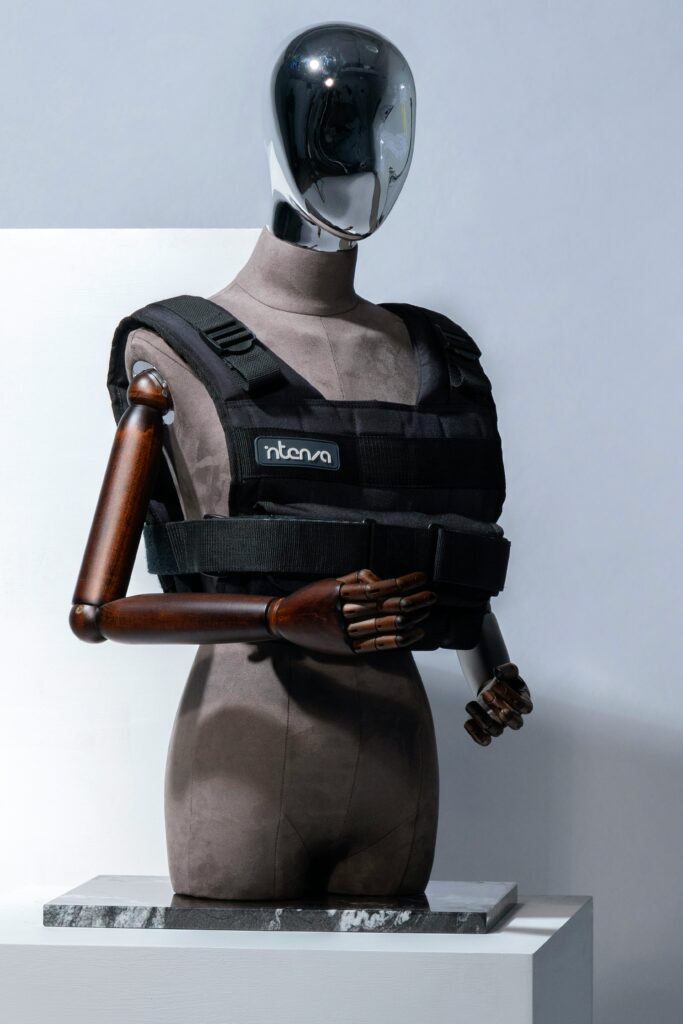
The most common mistake I hear about is doing too much, too fast. I’ve talked with people who went too heavy too soon and ended up with back or knee pain. A weighted vest isn’t meant to turn every workout into a max‑effort session. Instead, it’s a tool that works best when combined with simple movements, good form, and consistency.
This guide covers simple weighted vest exercises, how to structure workouts, and how to get started safely.
Quick answer (updated November 2026): The best weighted vest workout for beginners is a 20–30 minute walk in a light vest (about 5–10% of your body weight), followed by a few squats and lunges, 3 days a week. As a certified nutrition coach who lost 50 lbs walking, that’s what I do in a budget 12-lb vest. You don’t need an expensive vest or all-day wear.
Affiliate disclosure: Me-Fitter earns from qualifying Amazon purchases. It doesn’t change what I recommend.
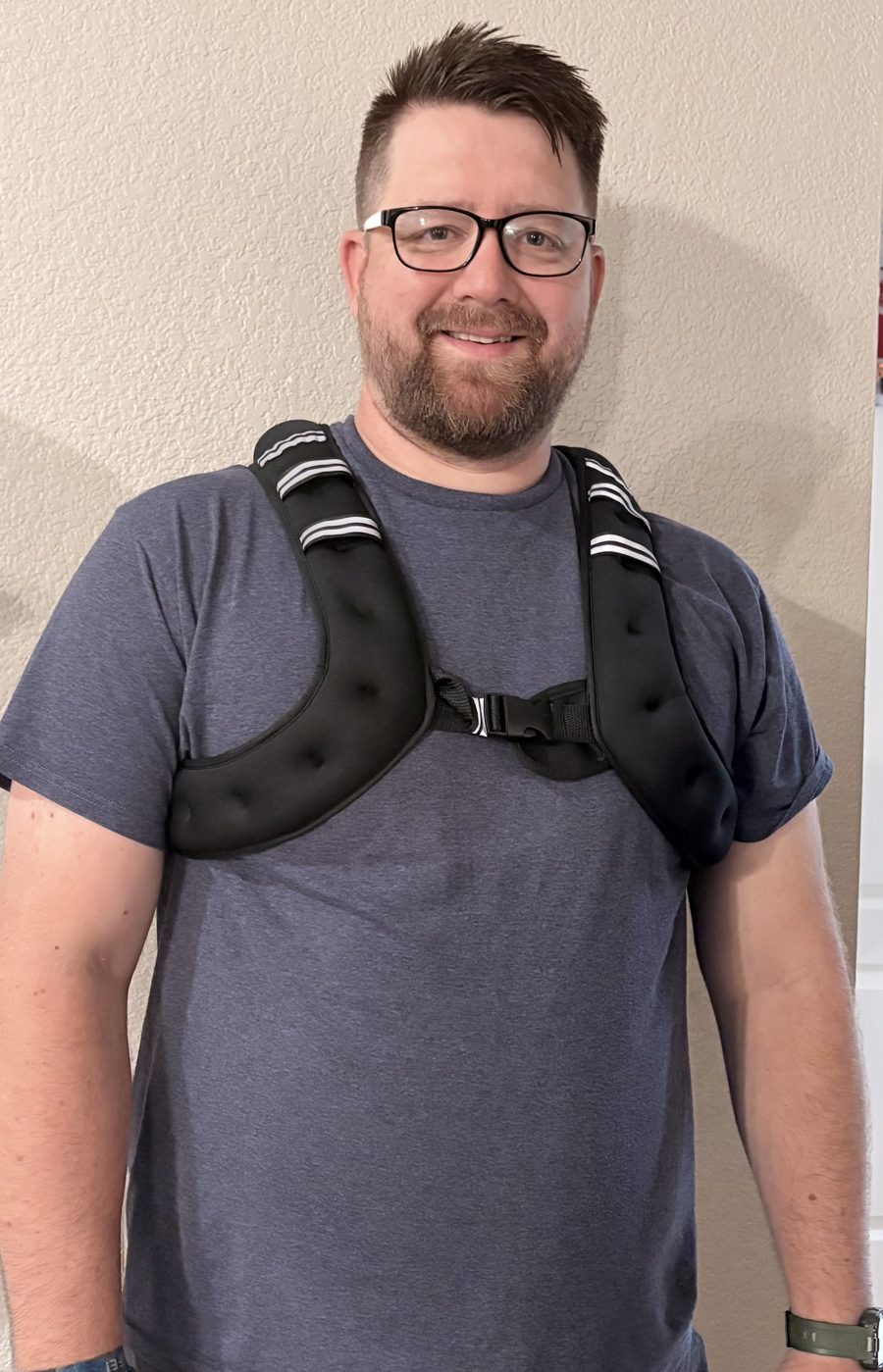
Want the walking side of things? Read my guide to walking with a weighted vest: benefits, how heavy to go and a 6-week plan.
Here is a complete list of the Best Home Gym Equipment that I recommend.
Table of Contents
Why Weighted Vests Are Great for Beginners
Weighted vests allow beginners to:
- Progress gradually using familiar exercises
- Increase intensity without adding complex movements
- Build strength while improving cardiovascular fitness
- Keep workouts short, effective, and repeatable
Because the load is evenly distributed, most people find weighted vest workouts easier to manage than dumbbells or machines when starting out.
What the Research Says About Weighted Vest Training
Wearing a vest makes the same movement harder. In a small treadmill study, walking in a vest weighing 10–20% of body weight raised oxygen use (a stand-in for calories burned) compared to walking without one, and the heavier vest raised it more (Puthoff et al., 2006). That is the main reason a vest is useful: it turns an easy walk or bodyweight move into real training without buying more equipment.
It is not magic, though. The biggest trial so far, the INVEST study, had 150 older adults who were losing weight wear a vest about 7 hours a day for a year. The vest did not prevent the hip bone loss that came with weight loss, and neither did supervised strength training (Beavers et al., JAMA Network Open, 2025). My take: a vest is a great way to make workouts harder, but don’t count on it alone to protect your bones. If you have osteoporosis or back problems, talk to your doctor before adding weight. I go deeper on that in my weighted vest and bone density post.
A 2026 review of vest studies in older adults found the same pattern. The benefits showed up when people did active, progressive workouts in the vest (stepping, functional moves, walking). Just wearing a light vest around showed little measurable change (Luo et al., Frontiers in Public Health, 2026). That’s why I use my vest for a focused workout instead of wearing it all day.
My Weighted Vest Workout Routine (What I Actually Do)
Here’s my real routine as a teacher and dad of four with two jobs:
- How often: 3 days a week, doing Workout 1 below: a vest walk, then a bodyweight circuit.
- When: after school and on weekends. That’s when it fits.
- Where: the circuit happens in my driveway right after the walk, or in the living room.
- Vest: my 12-lb ZELUS most days. Some days I use an adjustable vest (an inexpensive one from Temu) at 15 or 20 lbs.
- Bad-weather days: I walk on my older ProForm treadmill and do the squats and lunges in my bedroom.
- Off days: I still walk, just without the vest.
I didn’t start there. I started light and worked my way up. The payoff: my strength and endurance have gone up a lot, especially in my legs, hips and back. My knees feel more flexible and I have less fatigue. A full Workout 1 day takes me 30–45 minutes, walk and circuit together. I mostly do Workout 1. I’ve done Workouts 2–4 too, and I use them when I want to mix things up.
Want the full 8-week plan?
I’m building Walk It Off, a simple 8-week weighted vest walking program for busy beginners. It covers how far to walk and how much vest weight to wear each week, plus two 20-minute home strength workouts. Join the waitlist to get the founding-member price.
How Heavy Should a Beginner Weighted Vest Be?
For beginners:
- Start with 5–10% of body weight
- Focus on comfort and posture first
- Increase weight only after 2–3 weeks of consistent use
A lighter vest used consistently beats a heavy vest used inconsistently.
Weighted Vest Guidelines by Level
If you’re planning to keep training with a vest past the first few weeks, these guidelines are a good map. I agree with them for regular busy people, not just athletes:
| Level | Vest weight | Example (180 lb person) | What it looks like |
|---|---|---|---|
| Beginner | 5–10% of body weight | 9–18 lb | Vest walks and basic bodyweight moves, 15–30 min, 2–3 times a week |
| Intermediate | 10–15% | 18–27 lb | Longer walks, hills or incline, all four routines below |
| Advanced | 15–20% | 27–36 lb | Weighted push-ups, pull-ups and dips, short HIIT and intervals |
Start at the low end of your range, put form before load, and choose an adjustable vest if you plan to move up a level. For a deeper look at choosing a weight for walking, see my walking with a weighted vest weight chart.
✅ Beginner Weighted Vest Workouts (Full‑Body Focus)
Here are all four at a glance. Pick 2–3 per week and rotate them.
| Workout | Best for | What you do |
|---|---|---|
| 1. Walking + bodyweight circuit | Beginners, fat loss | 10–20 min vest walk, then 2–3 rounds of squats, incline push-ups, plank |
| 2. Lower-body strength | Legs, posture | 3 sets of squats, reverse lunges, calf raises |
| 3. Upper-body & core | Core, balanced strength | 3 rounds of push-ups, rows, plank |
| 4. Conditioning circuit | Heart rate, calorie burn | 4 rounds of step-ups, marching, rest (30 sec each) |
Workout 1: Walking + Bodyweight Circuit
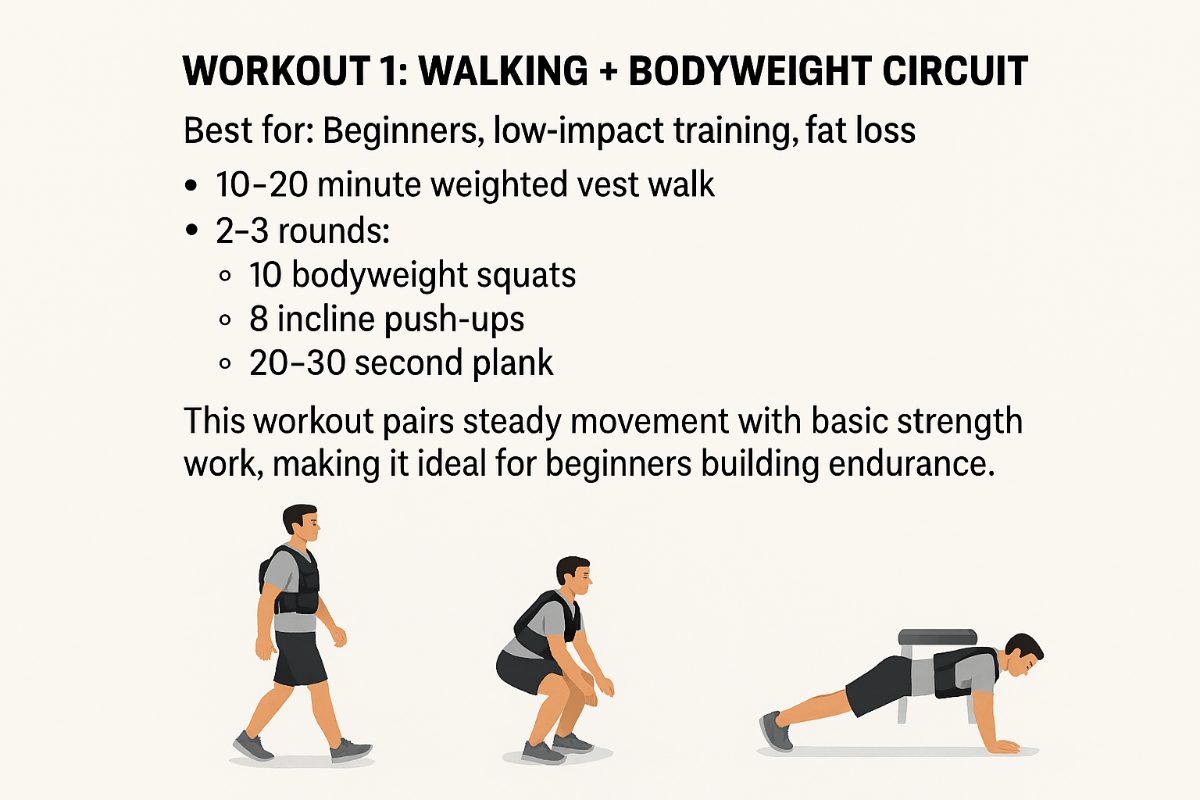
Best for: beginners, low-impact training, and fat loss.
- 10–20 minute weighted vest walk
- Then 2–3 rounds of: 10 bodyweight squats
- 8 incline push-ups
- 20–30 second plank
This one pairs steady movement with basic strength work, which makes it ideal for building endurance.
Workout 2: Lower-Body Strength
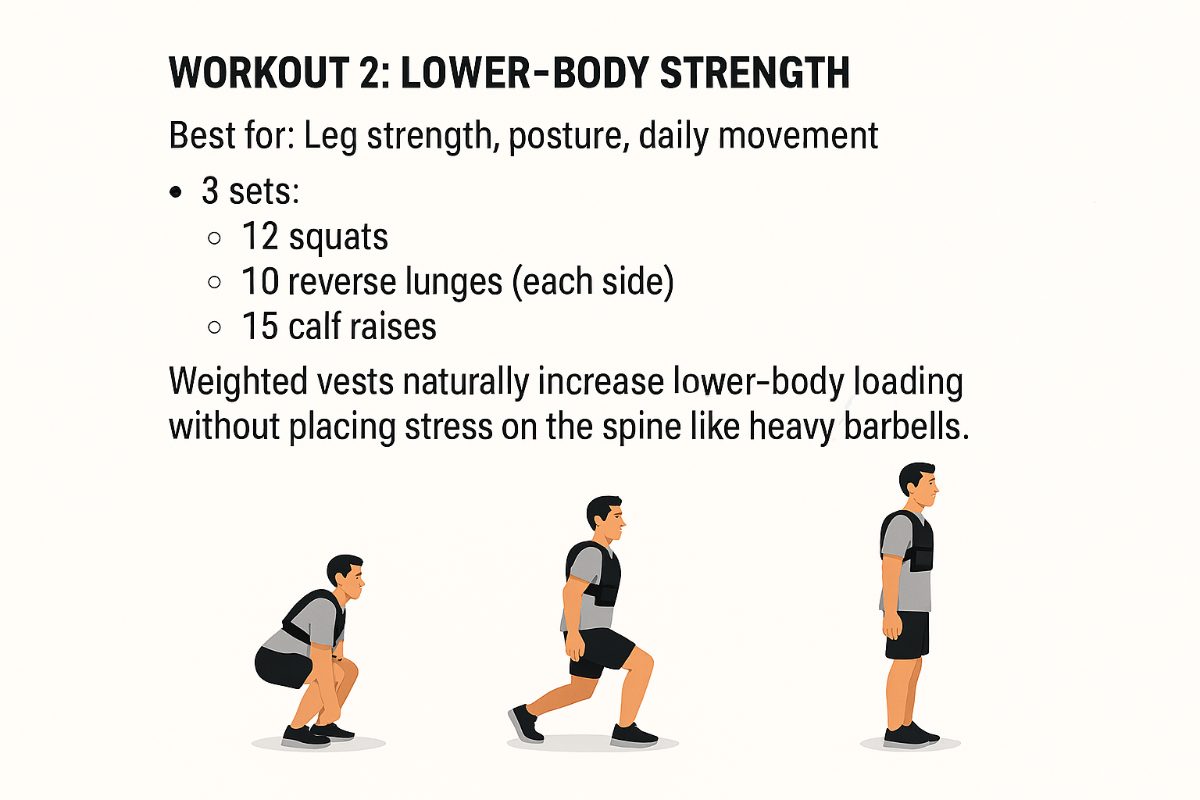
Best for: leg strength, posture, and daily movement.
- 3 sets: 12 squats
- 10 reverse lunges (each side)
- 15 calf raises
A vest adds load to your legs without putting a barbell on your back.
Workout 3: Upper-Body & Core Basics
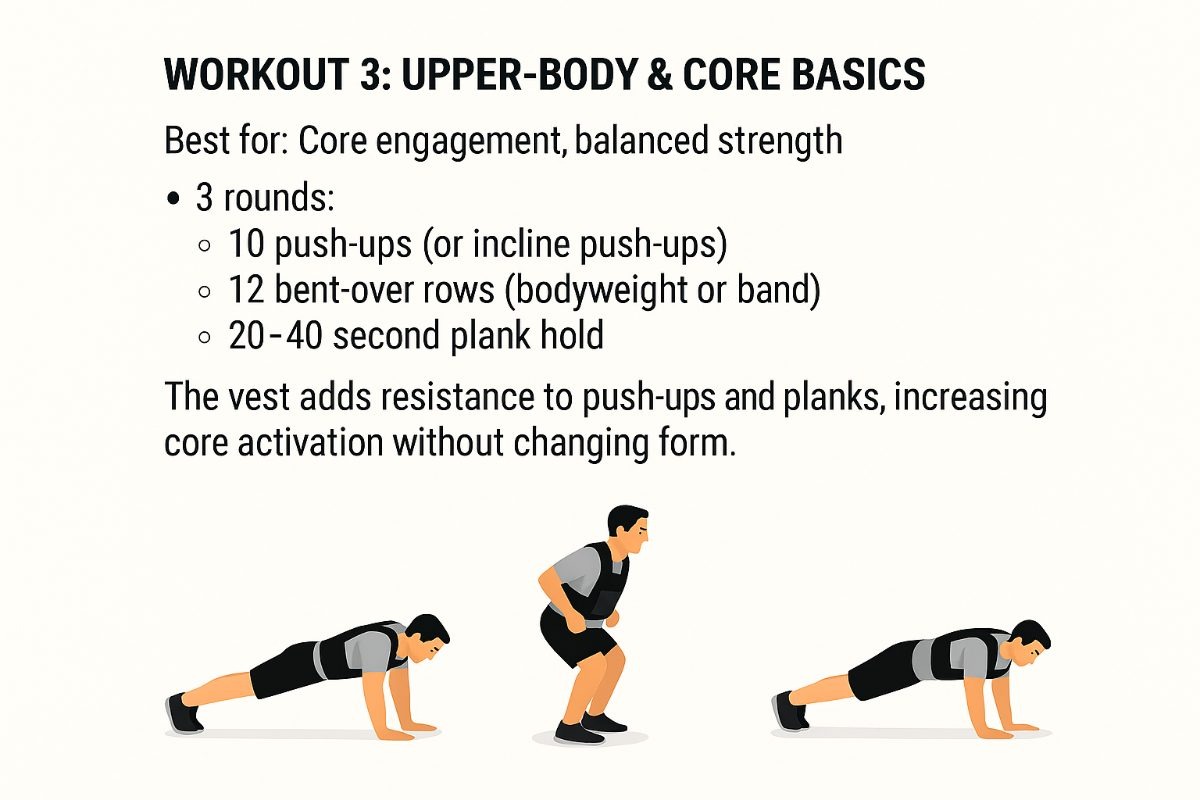
Best for: core engagement and balanced strength.
- 3 rounds: 10 push-ups (or incline push-ups)
- 12 bent-over rows (bodyweight or band)
- 20–40 second plank hold
The vest adds resistance to push-ups and planks without changing your form.
Workout 4: Simple Conditioning Circuit
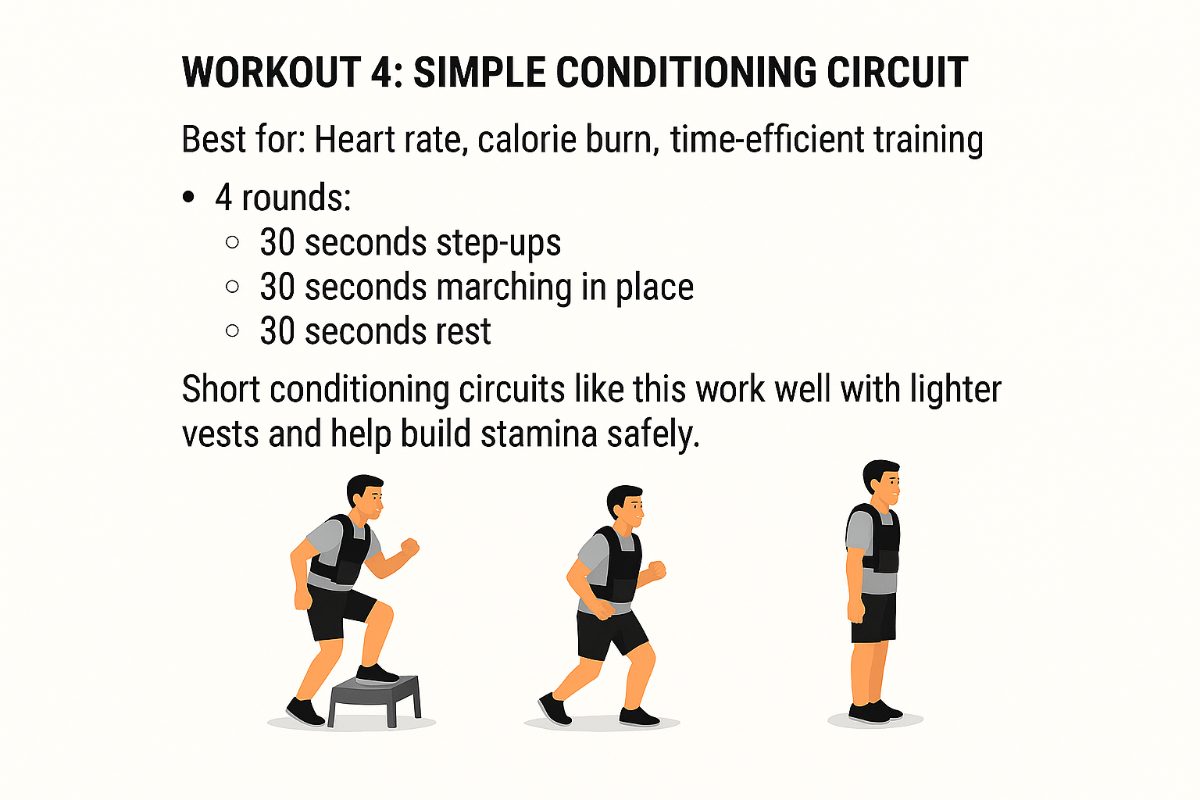
Best for: heart rate, calorie burn, and time-efficient training.
- 4 rounds: 30 seconds step-ups
- 30 seconds marching in place
- 30 seconds rest
Short conditioning circuits like this work well with a lighter vest and help build stamina safely.
Weighted Vest Exercises by Body Part
The best weighted vest exercises are the simple moves you already know: walking, squats, lunges and step-ups. Those four are what I do in my vest. If you’re brand new, I’d mostly just walk, then add some squats and lunges once walking in the vest feels easy.
| Body part | Exercise | Beginner tip |
|---|---|---|
| Legs and hips | Squats | Sit back to about chair height, 10–12 reps |
| Legs and hips | Reverse lunges | Hold a wall or counter for balance |
| Legs and hips | Step-ups | Use a low step or the bottom stair |
| Lower legs | Calf raises | Go slow, 15 reps |
| Upper body | Incline push-ups | Hands on a counter or bench |
| Upper body | Bent-over rows | Use a resistance band |
| Core | Plank | 20–40 seconds, keep hips level |
| Cardio | Walking (outside or treadmill) | 20–30 minutes, add hills later |
| Cardio | Marching in place | Easy indoor option |
Skip jumping moves and running at first. Extra weight adds to the impact on your knees and feet, so build up with walking and the moves above before trying anything faster.
Weighted Vest Workouts at Home (Bad-Weather Version)
You can do a full weighted vest workout at home with a treadmill, or even without one, in a space the size of a bedroom. When the weather is bad or the schedule is packed, I walk on my older ProForm treadmill in the vest, then do squats and lunges in my bedroom.
- Treadmill: 20–30 minutes at an easy pace with a low incline. Try not to hold the handrails.
- No treadmill: march in place or do step-ups on the bottom stair for about 10 minutes.
- Then: 2–3 rounds of 10 squats and 8 reverse lunges per side.
After the Beginner Stage: How I Add HIIT
Once a week, I do a harder session: a short HIIT workout with push-ups, running intervals and similar moves. It lasts no more than 10–15 minutes, usually on a grassy field at the park or in my front yard and driveway.
I wear my 12 lb ZELUS for these. A lighter, more comfortable vest makes push-ups and running much easier than my heavier adjustable vest.
I didn’t add HIIT until I’d lost about 20 pounds. At my heaviest, it was just too hard. That’s why the beginner routines are still my main workouts. They’re simple, but they’re highly effective for weight loss.
If you want to progress: wait until your vest walks and the circuits above feel easy, keep the vest on the lighter side, cap it at 10–15 minutes once a week and stop when your form slips. When you’re ready for more, weighted push-ups, pull-ups and dips are the next step.
Free Printable Weighted Vest Workout Plan (PDF)
Want this on your fridge? Grab my free printable Weighted Vest Walking Plan. It includes 3 at-home vest workouts, a vest weight chart, and a 6-week walking plan with a tracker.
How Often Should Beginners Do Weighted Vest Workouts?
A smart beginner schedule:
- ✅ 2–3 sessions per week
- ✅ Alternate workout days
- ✅ Avoid back‑to‑back loaded sessions early on
Progress comes from consistency, not exhaustion.
Signs You’re Doing Too Much (and What to Change)
Common warning signs are sore knees or feet, back or neck pain, shoulders aching from the straps, or your form falling apart near the end of a set. I’ve heard from people who went too heavy too fast and ended up with back or knee pain, so don’t ignore these.
If you notice any of these, here’s what to do:
- Lower the weight. Drop back to a lighter vest or fewer pounds first.
- Walk without the vest on your off days. You still get your steps without the extra load.
- Shorten the session before you quit altogether.
- Know when to stop. End the workout when your form slips, not when you’re wiped out.
If pain sticks around or gets worse, stop using the vest and talk to your doctor or a physical therapist. For a full rundown of who should be careful, see is a weighted vest safe?
Common Beginner Mistakes to Avoid
- Starting too heavy too soon
- Using weighted vests for running immediately
- Ignoring posture during walking
- Treating every workout like HIIT
What I’d skip as a beginner: running, burpees and jump squats in a vest. Those belong in CrossFit or sports training, not in a beginner’s or an older adult’s routine. I didn’t add running or HIIT until I’d lost about 20 pounds, and even now it’s once a week in my lightest vest. And wearing a vest all day isn’t necessary.
Weighted vest workouts are most effective when used as a progressive tool, not a punishment.
What Most Weighted Vest Advice Gets Wrong
You don’t need to wear a weighted vest all day, and you don’t need an expensive one. Get a budget vest and use it for 20–30 minutes on your workout days. That’s it.
I started on an inexpensive Temu vest, and my everyday vest is a 12-lb ZELUS. The INVEST trial above had people wear a vest about 7 hours a day for a year, and it still didn’t prevent hip bone loss, so more hours isn’t automatically better. Short, focused sessions are also much easier to stick with when you’re busy. If you want to compare budget options, see my best adjustable weighted vest picks.
How Weighted Vest Workouts Fit Into a Bigger Plan
I’ve found that weighted vest exercises work best when paired with:
- Regular walking
- Simple strength routines
- Sustainable nutrition habits
They’re not meant to replace everything else—they enhance what you’re already doing. For the walking side (benefits, how heavy to go and a 6-week plan), see my guide to walking with a weighted vest.
For the simple strength part, I grab a kettlebell. It works a lot like a weighted vest, just for stationary workouts, and you only need two. Mine is a generic one I picked up at a thrift store for $5. Here is my kettlebell price comparison and the best kettlebells for home gym.
If you’re ready to choose gear, I break down the best weighted vests for walking and beginner workouts based on comfort, adjustability, and real‑world use. If you want a direct pick, the ZELUS Weight Vest on Amazon is the one I use for all four workouts above and for my weekly HIIT session. If you want one vest that can go lighter or heavier as you progress, see my picks for the best adjustable weighted vest.
Weighted Vest Workouts for Women and Adults Over 50
Weighted vest workouts may help women and adults over 50 keep leg strength and support bone health, especially when the vest is paired with strength and impact exercises instead of just being worn around the house. Check with your doctor first if you have osteoporosis, back problems or balance issues.
The research is mixed. In a small 5-year study, postmenopausal women who did vest exercise with jumping and lower-body moves kept their hip bone density, while a group that didn’t exercise lost some (Snow et al., Journals of Gerontology, 2000). But in the larger INVEST trial, wearing a vest during weight loss didn’t stop hip bone loss (Beavers et al., 2025, above). My take: a vest is one useful tool, not a treatment.
- Start at the low end, around 5% of your body weight.
- Keep walking, and add squats, lunges and step-ups slowly.
- Hold a wall, counter or rail for balance on lunges and step-ups.
- Stop and get checked if you feel back, hip or knee pain.
For more detail, read my posts on weighted vests for osteoporosis and bone density and whether a weighted vest is safe.
Are weighted vest workouts good for beginners?
Yes, weighted vest workouts are beginner‑friendly when started with light weight and simple exercises. Beginners benefit most by using a vest during walking, squats, push‑ups, and basic circuits while focusing on good posture and controlled movement before increasing load.
How heavy should a weighted vest be for beginners?
Beginners should start with a weighted vest that is about 5–10% of body weight. This allows the body to adapt safely while improving strength and conditioning. The weight can gradually increase after a few weeks of consistent, pain‑free training.
What are the weighted vest guidelines by fitness level?
A common guideline is 5–10% of your body weight for beginners, 10–15% for intermediate and 15–20% for advanced. For a 180 lb person, that works out to about 9–18 lb, 18–27 lb and 27–36 lb. Start at the low end and only move up when your workouts feel easy.
Can weighted vest workouts help with fat loss?
Weighted vest workouts can support fat loss by increasing calorie burn during walking and bodyweight exercises. The added resistance raises heart rate and energy expenditure without requiring longer or higher‑impact workouts, making them effective for sustainable, low‑stress fat‑loss routines.
What are the best weighted vest exercises for beginners?
The best beginner weighted vest exercises include walking, squats, lunges, step‑ups, push‑ups, and planks. These movements use natural patterns, build full‑body strength, and allow beginners to progress safely without complex techniques or excessive joint stress.
How often should beginners do weighted vest workouts?
Beginners should perform weighted vest workouts 2–3 times per week, allowing rest days between sessions. This frequency supports adaptation and recovery while reducing the risk of overuse injuries, especially when combining weighted vest training with walking or basic strength exercises.
Is it safe to walk every day with a weighted vest?
Walking daily with a weighted vest can be safe if the weight is light, posture is maintained, and sessions are moderate in length. Beginners should avoid wearing a vest all day and gradually build duration to prevent joint or lower‑back discomfort.
Should beginners use weighted vests for running?
Running with a weighted vest is not recommended for beginners. The increased impact and loading can stress joints and connective tissue. Beginners should focus on walking and strength‑based weighted vest exercises before considering higher‑impact activities. I waited until I had lost about 20 pounds before adding running intervals, and I still keep them to one short session a week in my lightest vest.
Is there a free weighted vest workout PDF?
Yes. My free printable Weighted Vest Walking Plan includes 3 at-home vest workouts, a vest weight chart, and a 6-week walking plan with a tracker. You can grab it in the free PDF section above.
Should I wear a weighted vest all day?
No, and I don’t think it’s necessary. A 2026 review of vest studies found the benefits came from active, progressive workouts, while just wearing a light vest around showed little measurable change. A focused 20–30 minute vest walk or circuit is a better use of your time and easier on your joints.
How long should a beginner weighted vest workout be?
About 20–30 minutes is plenty: a vest walk, then a short bodyweight circuit if you have time. Stop sooner if your form slips or your knees, feet or back start to hurt.
When should I add HIIT to my weighted vest workouts?
Wait until your vest walks and the beginner circuits feel easy. I didn’t add HIIT until I’d lost about 20 pounds, because it was too hard at my heaviest. Now I do one 10–15 minute HIIT session a week with push-ups and running intervals, in my lighter 12 lb vest.
Is a heavier weighted vest always better?
No. A heavier vest isn’t better if it hurts your form or your recovery. Build up gradually, and add incline or time before you add more weight.
How long should you wear a weighted vest each day?
For workouts, 20–30 minutes on your workout days is plenty. That’s how I use mine, about 3 days a week. You don’t need to wear a weighted vest all day.
Do you need an expensive weighted vest?
No. A budget vest works fine for beginners. I started on an inexpensive Temu vest and now use a 12-lb ZELUS most days. Fit and comfort matter more than price.
Can you do a weighted vest workout on a treadmill?
Yes. Walk at an easy pace with a low incline and try not to hold the handrails. On bad-weather days I walk on my treadmill in the vest, then do squats and lunges in my bedroom.
Are weighted vest workouts good for women over 50?
They may help with leg strength and bone health when paired with strength exercises, but the research is mixed. Start light, and talk to your doctor first if you have osteoporosis, back problems or balance issues.
Final Thoughts: Are Weighted Vest Workouts Good for Beginners?
Yes — when done correctly. If a friend asked me how to start, I’d tell them: get a light or adjustable vest and just walk for 20–30 minutes every other day. Add the bodyweight circuit once that feels easy. The best weighted vest workouts for beginners focus on simple movements, moderate loads, and steady progress. Walking, bodyweight exercises, and short circuits provide plenty of challenge without unnecessary risk.
If a friend asked me how to start, I’d keep it simple: get one and give it a try. What do you have to lose?
If you’re looking for a way to increase workout intensity while keeping things simple, weighted vest training is one of the most beginner‑friendly options available.
Want a step-by-step plan? I’m building Walk It Off, an 8-week weighted vest walking program for busy beginners. Join the waitlist to get the founding-member price.





12 Comments