
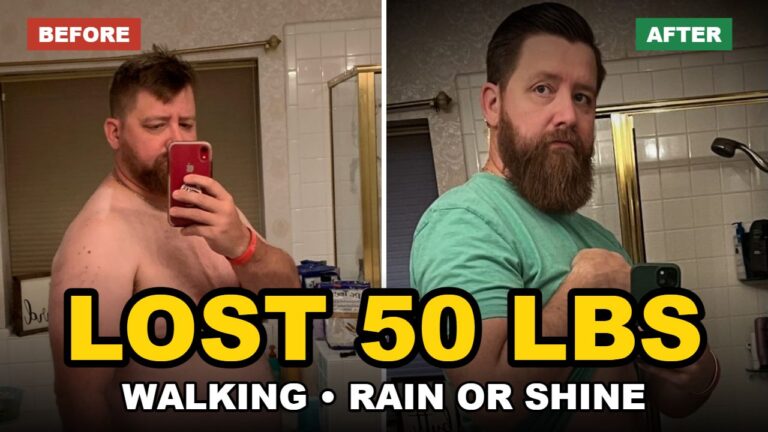
HIIT Workouts for Beginners (2026): A Simple Routine From a Dad Who Lost 50 lbs

The first time I did HIIT, it felt like death. I was exhausted, physically and mentally. I didn’t even try it until I’d already lost about 20 pounds, because early on I couldn’t handle much cardio at all.
Today I do one short HIIT session a week, and it’s gotten much easier over the last year. But here’s what most HIIT articles won’t tell you: you don’t need it to lose weight. Here’s how I’d start, what the research actually shows and the simple routine I use.
Quick answer (updated November 2026): HIIT workouts for beginners alternate short bursts of hard effort with rest, such as 30 seconds on and 30 seconds off, for about 10-15 minutes once or twice a week. As a certified nutrition coach who lost 50 lbs, I treat HIIT as an add-on to walking and strength training, not a must-have for weight loss.
Table of Contents
What Is HIIT?
HIIT (high-intensity interval training) means short bursts of hard work followed by short breaks, repeated for a few rounds.
A beginner session might be 30 seconds of squats, 30 seconds of rest, 30 seconds of high knees, 30 seconds of rest, and so on for 10-15 minutes. “Hard” is relative. For one person it’s sprinting. For someone just starting out, it might be walking fast up a hill.
My Experience With HIIT
I added HIIT in the middle of my weight loss, after I’d lost about 20 pounds. Before that, my body just wasn’t ready for much cardio, so I walked.
- The first sessions were brutal. I was wiped out physically and mentally. I had to keep reminding myself this was a process, and that I was changing mentally as well as physically.
- Now it’s once a week, 10-15 minutes. Mostly bodyweight moves: squats, push-ups, high knees and crunches, then a few sprints.
- It’s gotten much easier. Over the last year or so, I don’t struggle nearly as much as I did early on.
I only do it once a week on purpose. For me, walking and resistance training work better for long-term weight loss. HIIT is an add-on at the end of my other exercise, not my main workout.
Is HIIT Good for Weight Loss?
HIIT can help with weight loss, but it doesn’t burn much more fat than steady exercise like walking. Its real advantage is that it takes less time.
A review of 13 studies in adults with overweight or obesity found that HIIT and steady, moderate cardio reduced body fat and waist size by about the same amount. HIIT just took about 40% less training time (Wewege et al., Obesity Reviews, 2017).
So HIIT isn’t a fat-burning shortcut. Fat loss still comes from a calorie deficit. If you don’t know your numbers yet, start with my calorie calculator. Walking was my main exercise, and I explain why in walking for fat loss.
Do You Need HIIT to Lose Weight?
No. HIIT can be a good addition if you can handle it, but it’s not a must-have.
Especially early on, stick with what’s sustainable and easier to do before jumping into the harder stuff. For most beginners, that means a daily walk and two short strength sessions a week. My guide on how much to walk a day and these resistance training exercises are a good place to start.
My Simple 15-Minute Beginner HIIT Workout
This is built on the moves I actually use, with no equipment. Do it once a week to start, on a day you’re not sore.
Warm-up (2-3 minutes): walk or march in place, then do a few easy squats and arm circles.
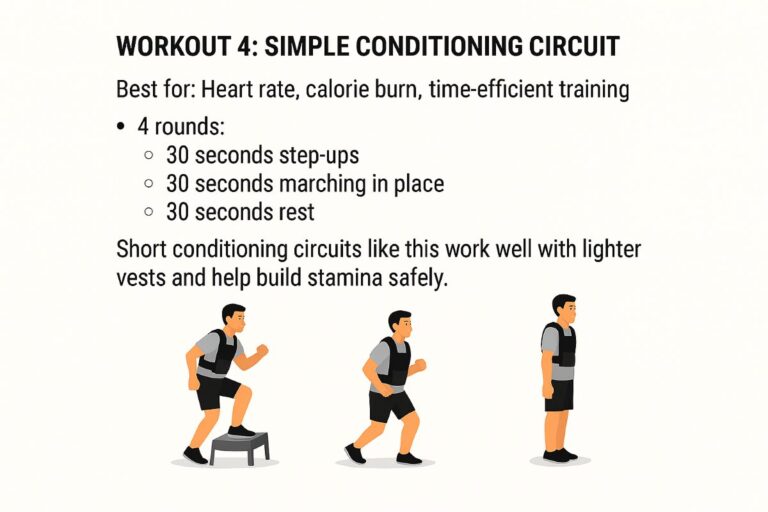
Circuit (about 8 minutes): do each move for 30 seconds, then rest for 30 seconds. Go through the list twice.
- Bodyweight squats: sit back like you’re lowering into a chair, then stand up.
- Push-ups: on your knees or against a counter is fine.
- High knees: march fast in place if running in place is too much.
- Crunches: slow and controlled, no yanking on your neck.
Sprint finisher (about 3-5 minutes): 3-5 sprints of 30 seconds, each followed by 30 seconds of rest. I do mine outside on my street or in the park next to my house. Beginners can swap in fast walking (see below).
Cool-down (2 minutes): walk slowly until your breathing settles, then stretch your legs.
I time mine with my Apple Watch. I used to use a timer, but now I know the rhythm. If you’re curious whether the watch itself helps, I wrote about whether an Apple Watch helps you lose weight.
Low-Impact HIIT for Heavier Beginners
If you’re heavier or just starting out, skip the sprints and use fast walking intervals and hills instead.
When I started at 265 pounds, sprinting wasn’t realistic. Fast walking and hills add intensity without putting an unbearable load on your joints. Here’s an easy way to start:
| Option | Hard part | Easy part | Rounds |
|---|---|---|---|
| Fast walking intervals | 30 seconds of brisk walking | 60 seconds of easy walking | 5-8 |
| Hill intervals | Walk up a hill or raise the treadmill incline for 30-60 seconds | Walk back down or lower the incline for 1-2 minutes | 4-6 |
| Bodyweight (no jumping) | 30 seconds of squats or wall push-ups | 30-60 seconds of rest | 2 rounds of 4 moves |
As it gets easier, shorten the easy part or add a round. If you like hills, my incline walking guide has more ideas. If walking itself is hard right now, start with how to start walking when you’re overweight.
If you have heart, blood pressure or joint problems, or haven’t exercised in a long time, check with your doctor before starting HIIT.
The Biggest HIIT Mistakes Beginners Make
The two biggest mistakes I see are going too hard too often, and giving up because it’s hard.
- Going too hard too often: HIIT every day leaves you sore and burned out. Once or twice a week is plenty for a beginner.
- Quitting because it’s hard: it’s supposed to feel hard, and the first few sessions feel the worst. It got much easier for me with time.
How Often Should Beginners Do HIIT?
Start with once a week, with at least one rest day before and after. If you feel recovered after a few weeks, you can go to twice a week.
I still do it only once a week because I fit it in at the end of my other exercise. With 4 kids and 2 jobs, I’d rather spend my time walking and strength training, and keep HIIT as a short add-on.
One more tip: wear supportive shoes. I wear Brooks for every workout because they’re so comfortable. Here are my picks for the best shoes for weight loss.
FAQ
Is HIIT good for beginners?
Yes, if you start easy. Use simple moves, rest as long as you work, and do it once or twice a week. Heavier beginners can use fast walking or hill intervals instead of jumping or sprinting.
How long should a beginner HIIT workout be?
About 10-15 minutes, including the warm-up and cool-down. That’s what I do. Longer isn’t better when you’re just starting out.
Can you do HIIT at home without equipment?
Yes. Squats, push-ups, high knees and crunches need nothing but floor space. I don’t use equipment for most of mine.
Does HIIT burn more fat than walking?
Not by much. A review of 13 studies found that HIIT and steady cardio reduced body fat by about the same amount, but HIIT took about 40% less time. Walking is easier to stick with, which is why it’s still my main exercise.
Is HIIT safe if you are overweight?
It can be, if you start with low-impact options. Fast walking intervals and hills add intensity without the joint stress of jumping or sprinting. Talk with your doctor first if you have heart, blood pressure or joint problems.
Do I need HIIT to lose weight?
No. A calorie deficit does most of the work. HIIT is an optional add-on. Walking and strength training worked better for me long term.
Final Thoughts
If a friend asked me whether to do HIIT to lose weight, here’s what I’d say: if you can bear it, it could be a good addition, but don’t feel like it’s a must-have. Especially early on, stick with what’s sustainable and easier to do before jumping into the harder stuff. If you want help with the food side, grab my free portion guide.




2 Comments