
Best Adjustable Weighted Vest (2026): 5 Picks From a Dad Who Started on a Temu Vest
This post contains affiliate links. If you buy through them, I may earn a small commission at no extra cost to you. See my affiliate disclosure.
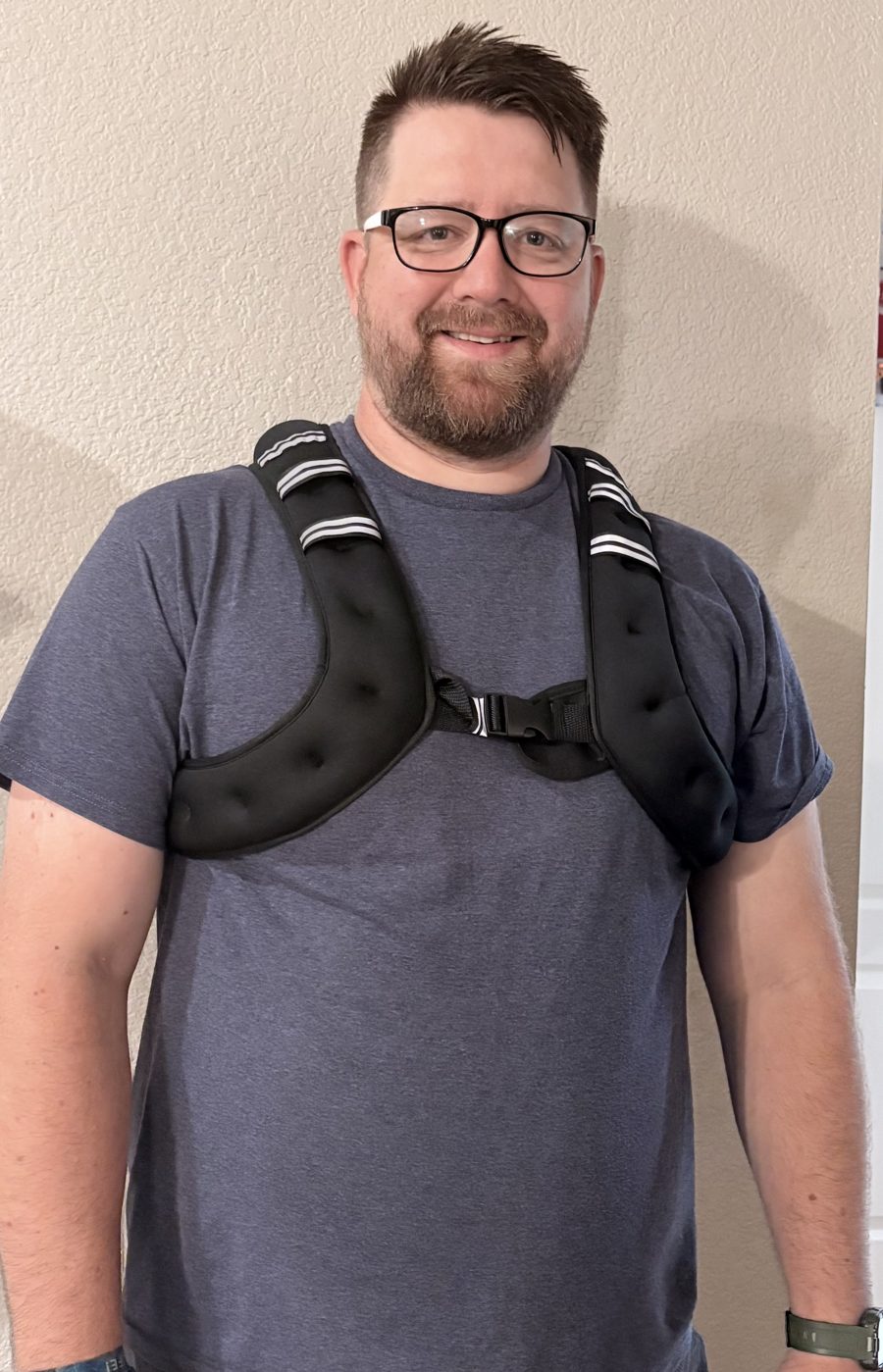
Confession time: the adjustable weighted vest I use on my walks came from Temu. I also own a fixed-weight ZELUS vest from Amazon, which is way more comfortable, but I wish it were adjustable like my Temu one. Before those, I had a $10 vest from Five Below that was surprisingly comfortable but not very heavy, and a first vest made of rough material that chafed my shoulders and sides. So when people ask me for the best adjustable weighted vest, my answer is not the $260 one at the top of the big review sites. At least not yet.
I am a busy dad of four, I work two jobs, and walking is my main exercise. I am also a certified nutrition coach who lost 50 pounds by keeping things simple. Here is what I have learned about adjustable vests from wearing one, plus the five I would actually point a friend to in 2026.
Quick answer (updated October 2026): For most beginners, the best adjustable weighted vest is a cheap one with removable weight bags, like the ZELUS Adjustable Weighted Vest or the ApexUp Adjustable Weighted Vest (both around $30). Pick a soft, padded vest, choose a weight range that covers where you are now and where you want to be, and start light. Save the $100 to $260 steel-weight vests like the Hyperwear Hyper Vest ELITE for later, once you know what you like.
Table of Contents
What Is an Adjustable Weighted Vest?
An adjustable weighted vest lets you add or remove weight instead of being stuck at one number. That matters because the right weight changes. You will want less on day one than in month three, and less on a quick step-catch-up walk than on your main workout.
There are three main ways vests adjust:
- Fill-your-own sandbags: You fill small bags with sand and slide them into pockets. Cheapest and very flexible, but slow to change. This is what my Temu vest uses.
- Pre-filled iron sand bags: Small sealed bags (often 1 lb each) that slip in and out. Fast to adjust, but each vest only covers a set range, like 12 to 18 lb or 20 to 32 lb.
- Steel bars or iron plates: Thin weights that clip or slide in. Quickest to adjust and the slimmest fit, but they cost a lot more.
My Experience With an Adjustable Weighted Vest
My Temu vest holds up to about 30 pounds. It uses fillable sandbags that slide into Velcro pockets, so I can make it heavier or lighter whenever I want. The bags stay put once they are in. They do not shift around on my walks.
The downside is time. Filling and tying those bags takes a while. If you want to change weight in 30 seconds before you head out the door, sandbags are not it.
Here is how I actually use it:
- Main walks: 15 to 20 pounds on my neighborhood loop, about 2.5 to 3 miles.
- Extra step days: I drop down to 10 to 12 pounds when I just need to get a few more steps in.
- Bad weather or short on time: Same vest, on the treadmill.
That range is exactly why I like adjustable. One vest covers my hard days and my easy days. Since I started walking with it, I feel much stronger overall, especially my legs. And I feel great when I take it off after a walk.
I also own a fixed-weight ZELUS vest. It is way more comfortable than my Temu vest, but I cannot change the weight. That trade-off is exactly what to think about when you shop: ideally you want the comfort of a good padded vest with the adjustability of mine.
Best Adjustable Weighted Vests (2026)
I own a Temu sandbag vest and a fixed-weight ZELUS, but I have not worn the adjustable models below. I picked them using what my own vests taught me: comfort first, a weight range that fits how you walk, and an easy way to adjust. Prices are approximate and change often on Amazon.
| Vest | Best for | How it adjusts | Weight range | Approx. price |
|---|---|---|---|---|
| ZELUS Adjustable | Budget pick | Removable 1 lb iron sand bags | Sold in ranges from 4 to 32 lb | ~$27 |
| ApexUp Adjustable | Walking | 6 removable iron sand weights | 4–10, 12–18 or 20–32 lb | ~$30 |
| BAGAIL Adjustable for Women | Women | 6 removable 1 lb iron sand bags | 4–10, 12–18 or 20–32 lb | ~$27 |
| RUNmax Pro | Going heavier | Removable weights, shoulder pad option | Versions from 12 up to 60 lb | From ~$26 |
| Hyperwear Hyper Vest ELITE | Premium, no sand | Thin removable steel weights | Comes with 10 lb, add booster packs | ~$260 |
1. ZELUS Adjustable Weighted Vest: Best Budget Pick
This is the vest I would look at first. I own ZELUS’s fixed-weight vest, and it is way more comfortable than my Temu one. My only wish is that it were adjustable, and this model is ZELUS’s adjustable version (I have not worn this exact one). It is soft neoprene, it closes with hook-and-loop straps, and it uses small 1 lb iron sand bags you can pull out or add back in seconds. No filling and tying like my Temu vest. At around $27, it is cheap enough that if you decide you want something different later, you have not wasted much.
- Pros: Low price, soft material, quick 1 lb changes, front pocket for your phone and keys.
- Cons: Each version only adjusts within its own range, so pick the size that matches your goal weight. One-size-fits-most may not fit everyone.
Check the ZELUS Adjustable Weighted Vest on Amazon
2. ApexUp Adjustable Weighted Vest: Best for Walking
The ApexUp is my top walking pick in my best weighted vests roundup, and the adjustable version makes sense for the same reasons. It comes in 4–10, 12–18 and 20–32 lb versions with six removable iron sand weights and a large front pocket. For a 15 to 20 lb walk like mine, the 12–18 or 20–32 lb version is the one to look at.
- Pros: Built for walking, simple to adjust, large pocket, reasonable price.
- Cons: Only about 6 to 12 lb of adjustment inside each version. If you want to go from 10 lb to 30 lb in one vest, you need a different style.
Check the ApexUp Adjustable Weighted Vest on Amazon
3. BAGAIL Adjustable Weighted Vest for Women: Best for Women
BAGAIL made this one with a U-shaped neck and an X-shaped body to keep pressure off the neck and shoulders, which is where a lot of people (me included) get sore or chafed. It starts at a 4 lb base and adds weight with six removable 1 lb bags, and it has 360 degree reflective trim for early morning or evening walks.
- Pros: Women-specific shape, soft neoprene, beginner-friendly 4 lb starting point, reflective.
- Cons: Same narrow range per version as the others.
Check the BAGAIL Adjustable Weighted Vest on Amazon
4. RUNmax Pro Weighted Vest: Best for Going Heavier
If you already know you want to go past 30 lb, RUNmax makes versions from 12 lb all the way up to 60 lb with removable weights. The part I like most is the shoulder pad option. After my first rough vest, I would pay a little extra for padding every time.
- Pros: Wide range of max weights, optional shoulder pads, low starting price, lifetime warranty.
- Cons: Heavier versions cost more. Nylon is tougher but not as soft as neoprene.
Check the RUNmax Pro Weighted Vest on Amazon
5. Hyperwear Hyper Vest ELITE: Best Premium Pick
This is the vest you upgrade to, not the one you start with. It uses thin removable steel weights instead of sand, so there is no filling and tying, and it is slim enough to wear under a hoodie. It comes with 10 lb, and you can add booster packs to go heavier. It is a great vest, but at around $260 it only makes sense once you know you will wear it a lot. For women who want the same idea at a lower price, Hyperwear also makes the Hyper Vest FIT (around $115), which starts as light as 1 to 2 lb and goes up to 10 lb.
- Pros: Fastest to adjust, slim and quiet, machine washable once the weights are out.
- Cons: Expensive. Extra weight is sold separately.
Check the Hyperwear Hyper Vest ELITE on Amazon
How to Choose an Adjustable Weighted Vest
If a friend asked me what to look for, this is what I would tell them, in this order:
- Comfort first. Look for cushioning or a soft lining on the inside. My first vest was a rough material that chafed my shoulders and sides. A vest you hate wearing is a vest you stop wearing.
- The right weight range. Most budget vests only adjust within a set range, like 12 to 18 lb. Pick the range that covers where you are now and where you want to be in a few months. If you want a huge range in one vest, a fill-your-own sandbag vest like mine (nearly empty up to about 30 lb) does that, it just takes longer to change.
- How it adjusts. Sandbags you fill yourself are cheap but slow. Pre-filled iron sand bags are quick. Steel weights are quickest, and the priciest.
- Price. Start cheap. The expensive vests are great, but they may not fit your needs even at the high price. A $25 to $40 vest will teach you what you like.
How Heavy Should Your Adjustable Weighted Vest Be?
Start low and work your way up. The biggest mistake I see is starting too heavy. It should feel hard, but it should not hurt your body.
Research gives a helpful starting point. In an American Council on Exercise study, women walked at 2.5 mph wearing vests at 10% and 15% of their body weight. Both loads worked, and going from 10% to 15% did not make the walk feel any harder to them. A lot of trainers use about 5% to 10% of body weight as a starting point and build from there.
For me, that means 15 to 20 pounds on my main walks and 10 to 12 on easy days. For a full week-by-week build-up, see my walking with a weighted vest guide and 6-week beginner plan.
Do You Need a $200 Weighted Vest?
No, not to start. A $200 plate carrier is great, but it is built for more advanced ruckers and athletes. And I do not buy the idea that weighted vests are only for CrossFit. They are a great addition for CrossFit athletes, but they are just as useful for regular people walking around the block.
Between a $10 Five Below vest, a Temu sandbag vest and a fixed-weight ZELUS, I figured out what I actually needed before spending more: the comfort of my ZELUS with the adjustability of my Temu vest.
Do Adjustable Weighted Vests Help With Weight Loss?
They can help you burn more on the walks you are already taking. In the ACE study above, a vest at 15% of body weight raised calorie burn by about 12% on flat ground, and the effect got bigger on hills. A 2024 study in Medicine & Science in Sports & Exercise found that energy cost climbs as vest weight goes up, and that a vest is less demanding than carrying the same weight in a backpack.
That is a nice boost, not magic. Weight loss still comes down to your overall calorie balance. Use my calorie calculator to find your numbers, and see does a weighted vest help lose belly fat for the honest answer on spot reduction.
Pros and Cons of Adjustable Weighted Vests
| Pros | Cons |
|---|---|
| One vest for hard days and easy days | Budget vests only adjust within a set range |
| Lets you start light and build up safely | Fill-your-own sandbags take time to fill and tie |
| Cheap options work well for beginners | Steel-weight vests that adjust fast are expensive |
| Works outside and on the treadmill | Rough materials can chafe, so look for padding |
Who Should Be Careful
Talk to your doctor before adding weight if you have back, knee, hip or balance problems, osteoporosis, heart issues, or if you are pregnant. If anything hurts (not just feels hard), take weight out. I go deeper on this in is a weighted vest safe and in my post on weighted vests and bone density.
Want a plan to go with your vest? Try my Walk It Off 8-week weighted vest walking program, and grab the free portion guide to keep your eating simple too.
Adjustable Weighted Vest FAQ
Are adjustable weighted vests better than fixed-weight vests?
For most people, yes. You can start light, add weight as you get stronger, and go lighter on easy days. A fixed vest is only better if you already know the exact weight you want and never plan to change it.
Is a 20 lb weighted vest heavy?
It depends on your size and fitness. For me, 15 to 20 lb is my normal walking weight, but I did not start there. If you are new, start lighter and work up to 20 lb over a few weeks.
Is it okay to walk with a 10 lb weighted vest?
Yes. 10 lb is a great starting weight for a lot of people, and I still use 10 to 12 lb on days I just want extra steps.
How often should you walk with a weighted vest?
Beginners usually do well with two or three vest walks a week, with regular walks on the other days, then add more as your body adjusts. My 6-week beginner plan lays this out step by step.
What is a good price for an adjustable weighted vest?
About $25 to $40 gets you a solid beginner vest with removable weights. Premium steel-weight vests run around $100 to $260. I would start cheap and upgrade once you know what you like.
Can I wear an adjustable weighted vest on a treadmill?
Yes. I use mine on the treadmill when weather or time keeps me inside. Hold the rails only for balance, not to support your weight.
What can I use instead of a weighted vest?
A rucking backpack or ankle weights are the common alternatives. I compare all three in weighted vest vs. ankle weights vs. rucking.
The Bottom Line
Get one! An adjustable weighted vest is such a great addition to your weight loss and fitness journey. I only saw positives once I started using one, and I will use one forever. Start with a cheap, comfortable vest like the ZELUS or ApexUp, start light, and work your way up.
Sources
- Kravitz L, McCormick J. The Metabolic Cost of Slow Graded Treadmill Walking With a Weighted Vest in Untrained Females. American Council on Exercise, 2013.
- Looney DP, et al. Metabolic Costs of Walking with Weighted Vests. Medicine & Science in Sports & Exercise. 2024;56(6):1177–1185.