
Simple Weight Loss Plan That Actually Works (My Daily Routine)
Losing weight can feel overwhelming when every plan comes with a long list of rules. Mine doesn’t have many. I’m a busy dad of four with two jobs, and this is the simple daily routine that helped me lose 50 lbs.
Quick answer (updated November 2026): The simplest weight loss plan that works is one you’ll stick with: a calorie deficit, plenty of protein, 10,000 steps a day, lifting 2–3 times a week and 7–9 hours of sleep. As a certified nutrition coach, I lost 50 lbs in about 6 months this way, without cutting out the foods I love.
This post contains affiliate links. If you buy through them, I may earn a small commission at no extra cost to you. It helps keep this site running.
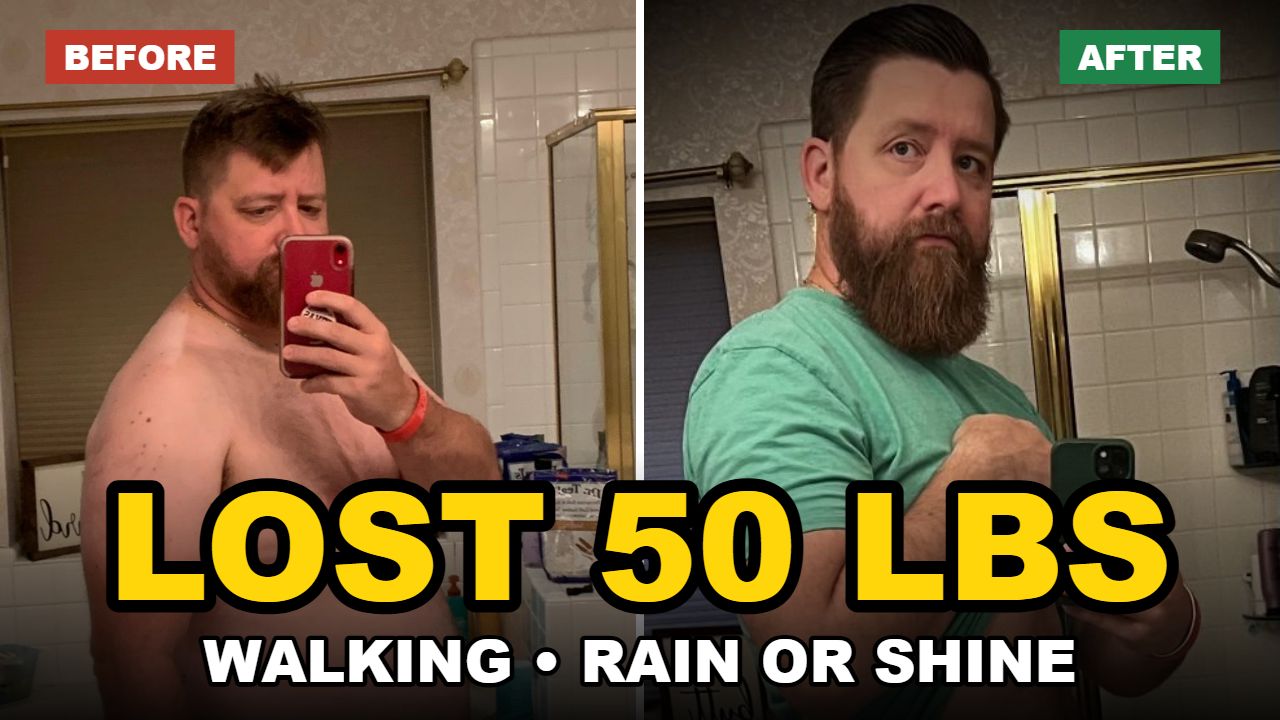
Table of Contents
What’s the Easiest Weight Loss Plan to Follow?
The easiest weight loss plan to follow is the one you’ll actually stick with. Most plans fail because they’re miserable, not because they’re wrong. Mine comes down to four basics:
- Eat in a calorie deficit. Find your number with my free calorie calculator.
- Eat plenty of protein. I aim for about 1 gram per pound of my goal weight.
- Move every day. I walk 10,000–12,000 steps every day and lift 2–3 times a week.
- Sleep 7–9 hours. I treat it as a top priority.
My Simple Daily Weight Loss Routine
Here’s what a normal workday looks like for me:
| Time | What I do |
|---|---|
| Morning | Weigh in after using the restroom, then drink a glass of water with my supplements |
| Breakfast | Skip it on fasting days (16:8, 2–3 days a week). Otherwise, 3 eggs or oatmeal with a scoop of whey |
| Workday | Short walks in the school hallway on my breaks |
| Lunch | A Lean Cuisine, Chipotle, or a meal I made at home, like ground beef and rice |
| After work | My bigger walk around the neighborhood, plus lifting 2–3 days a week |
| Dinner | Whatever the family picks, with a smaller portion if it’s calorie-dense |
| Night | 7–9 hours of sleep |
Your First Week on This Plan
If you’re starting today, do these three things in your first week:
- Cut out liquid calories. Switch to diet soda, use zero-calorie sweetener in coffee or tea, and drink water. Cutting sodas was the first thing I changed.
- Count calories like you’re religious about it. Find your number with my calorie calculator, then track everything. I started at about 2,300 calories a day with MyFitnessPal. Today I use Cronometer and eat about 1,800–2,000, because my body needs less at 215 than it did at 265.
- Walk 10,000 steps a day. Make it non-negotiable. I started around 8,000 and now walk 10,000–12,000 every day.
Expect a big drop that first week. I lost around 6–8 pounds, but most of it was water, not fat.
Morning: Weigh In, Water and Supplements
I weigh myself every morning after using the restroom, then drink a glass of water with my supplements. Daily weigh-ins bounce around, so I watch the trend over a week or two, not one number.
Weighing daily is backed by research. In a 6-month study from Duke and UNC, people who weighed themselves every day picked up more healthy weight-control habits than people who weighed less often.
For supplements, I take Rainbow Light Men’s One +, the same multivitamin I’ve used for about 8 years. It fills gaps in my diet, but it doesn’t cause weight loss. More in my multivitamin guide.
Do You Need Intermittent Fasting to Lose Weight?
No, intermittent fasting is optional. I fast 2–3 days a week with a 16:8 window (eating within 8 hours), and on other days I eat a light, high-protein breakfast.
Fasting works because it can help you eat less, not because of special fat-burning powers. In a 12-month trial of 139 adults published in the New England Journal of Medicine, people who ate only between 8 a.m. and 4 p.m. and also cut calories lost about 8.0 kg, compared with about 6.3 kg for calorie cutting alone. The difference wasn’t statistically significant. Total calories did the heavy lifting.
What I Eat in a Day
I eat normal food. It’s not about what you eat in most cases, but how much you eat.
- Breakfast (non-fasting days): 3 eggs, or oatmeal with a scoop of whey. When I’m in a hurry, an Egg McMuffin with regular bacon instead of Canadian bacon.
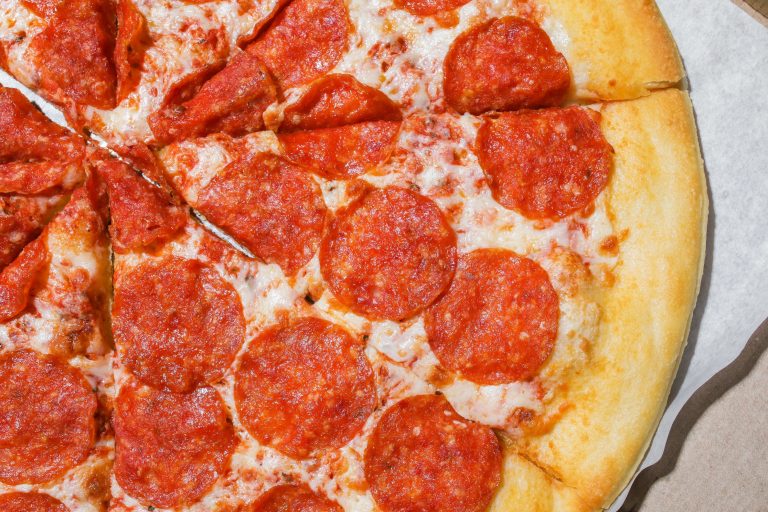
- Lunch: A Lean Cuisine pepperoni pizza when I’m being cheap and in a hurry, Chipotle, or a pre-made meal from home, like ground beef with rice.
- Dinner: Whatever the family chooses. I work around it.
When we eat out, I’m deliberate about my order. Here’s what I order at Chipotle, Taco Bell and Chick-fil-A. When we eat at home and the meal is calorie-dense, I just eat a smaller portion. To learn portions without a scale, see my hand portion guide.
How I Handled Junk Food and Cravings
The hardest part was not giving in to the foods that got me to 265: fast food, overeating chips and bread at restaurants, and snacking on junk. Some days it was pure willpower, but I don’t recommend relying on that. Swapping worked better:
- Protein ice cream in my Ninja Creami
- Protein pudding and lower-calorie cookies I make myself
- Smaller portions of the snacks and desserts I already loved
How Much Protein Do You Need to Lose Weight?
I eat about 1 gram of protein per pound of my goal body weight, which is around 180 grams a day. Using your goal weight instead of your current weight keeps the number realistic if you have a lot to lose.
Protein helps you hold on to muscle while you lose fat. A 2024 review of 47 trials found that adults with overweight who ate more protein (over 1.3 g per kg of body weight) kept more muscle during weight loss than those who ate under 1.0 g per kg. My target is on the high end of that range. If you have kidney disease, check with your doctor before eating more protein.
A scoop of whey in my oatmeal makes the number easier to hit. I rotate between three brands of whey, but my usual go-to is Optimum Nutrition Gold Standard. See my protein powder guide for more options.
Do Carbs Matter for Weight Loss?
Carbs aren’t the enemy. I eat a macro-balanced diet, and I treat overeating as the enemy, not carbs.
Fat actually carries more calories per gram (9) than carbs (4). But cutting back on carbs can be easier for some people, because that’s where the sweets, breads and starchy foods are, and that’s where most of us overeat. For more, see my calorie deficit and macros guide.
How Much Exercise Do You Need to Lose Weight?
I walk most days and lift weights 2–3 days a week. Walking adds to my calorie deficit, and lifting helps me keep muscle.
Here’s my take on walking for fat loss, my 20-minute dumbbell workout, and the home gym equipment I actually use.
Sleep and Water: The Parts People Skip
I believe sleep may be the most important part of your health, so I treat it as a high priority and aim for 7–9 hours a night. I also drink half a gallon to a gallon of water a day.
Sleep affects how much you eat. In a 2022 NIH-funded study of 80 adults who usually slept under 6.5 hours, people who slept about 1.2 hours more ate roughly 270 fewer calories a day over two weeks. More on this in how fixing my sleep helped me lose 50 lbs.
The 3 Biggest Mistakes When Starting a Weight Loss Plan
- Cutting too many things out of your diet. If your plan is miserable, you won’t stick with it. Keep foods you enjoy and adjust portions instead.
- Beating yourself up when you make a mistake. One bad meal or day doesn’t ruin anything. Get back to your routine at the next meal.
- Cutting calories or carbs too low. A tiny calorie number or a no-carb diet is hard to keep up. It’s about adapting, not eliminating.
How Fast Will You Lose Weight on This Plan?
Most people lose fastest in the first week or two, then settle into a slower, uneven pace. I went from 265 to 215 in about 6 months, roughly 2 pounds a week on average, but it was never a straight line. It came off fast, then I hit plateaus, then it moved quickly again. The CDC calls 1–2 pounds a week a healthy pace (CDC).
When I hit a plateau, I usually just stayed on the plan. If it lasted, I lowered my calories a little or walked more. I wrote about my first month in how to lose 10 pounds in a month.
Does This Plan Work for Men Over 40?
Yes. The plan doesn’t change after 40: eat in a calorie deficit and move more. I’m 43. What changed for me wasn’t the plan, it was dealing with lower energy and slower recovery, especially at the start. Three changes made the biggest difference:
- I made sleep a priority. In one study, dieters eating the same calories lost 55% less fat and more muscle when they slept 5.5 hours instead of 8.5 (Nedeltcheva et al., Annals of Internal Medicine, 2010). More on that in the link between sleep and weight loss.
- I ate more protein. Protein helps you hold on to muscle while you’re in a deficit, which matters more as you get older. More in my guide to protein for weight loss.
- I walked to make my workouts less stressful. Walking burned calories without draining the energy I needed for two jobs and four kids. I paired it with simple strength work like my 20-minute dumbbell workout and push-ups. Strength training helps adults with extra weight lose fat while keeping muscle (Lopez et al., Obesity Reviews, 2022).
Simple Weight Loss Plan: FAQ
Is there a free simple weight loss plan PDF?
Yes. My free Portion Control Cheat Sheet gives you a simple way to size meals without a scale or counting.
Can I eat fast food and still lose weight?
Yes, if it fits your calories. Pick your order before you go and lean on protein. I still eat Chipotle and an occasional Egg McMuffin.
Should I weigh myself every day?
Daily weighing works well for me and is backed by research, but watch the weekly trend, not single days. If the scale stresses you out, weighing once a week is fine too.
Do I have to count calories?
You need to be in a calorie deficit, but counting is just one way to get there. If you want to try it, here’s how I count calories as a busy dad.
Final Thoughts
What’s the simplest weight loss plan that actually works? Honestly, the one that you will stick with. Keep it simple, keep the foods you enjoy, and stay consistent. It’s about adapting, not eliminating.
Want help following this plan? I’m opening 5 founding spots for 1:1 coaching at $99 a month, with weekly check-ins and a plan built around your schedule. Apply for coaching here.




18 Comments