Step-Ups for Seniors: The Simple Leg Exercise I’d Start With
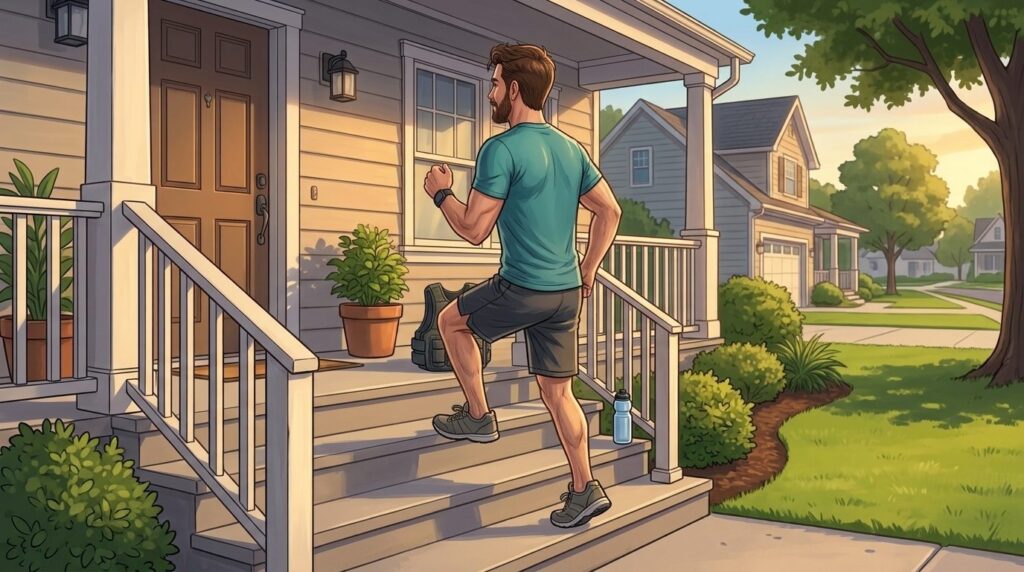
Stairs, curbs, getting into a car or onto a bus: life after 65 is full of steps. That’s exactly why the step-up is the leg exercise I picked when Eat This, Not That! asked me for my favorite leg-strength move for women over 65.
I’m Brett, a dad of four who works two jobs and lost 50 pounds by keeping things simple. I don’t do step-ups in a gym. I do them on the stairs in the hallway at work and on our stairs at home. If you can find one stair and something to hold on to, you can do them too.
Quick answer (updated November 2026): Yes, step-ups are one of the best leg exercises for seniors because they train the exact motion of climbing stairs and curbs, one leg at a time, while also working balance. As a certified nutrition coach who lost 50 pounds keeping things simple, I tell people over 65 to start on a low step with a railing or sturdy chair for support and build up slowly.
This post contains an Amazon affiliate link. If you buy through it, I may earn a small commission at no extra cost to you. Read my affiliate disclosure.
Table of Contents
Why Step-Ups Are So Good for Seniors
Step-ups are so useful after 65 because they copy the movements you already need every day. Every time you climb a stair, step onto a curb or climb into a car, one leg does most of the work while the other is in the air. A step-up trains exactly that.
- One leg at a time. It builds the quads and glutes on each side separately, which helps even out the strength gap most of us have between our two legs.
- Balance built in. Standing on one leg as you rise challenges the small stabilizing muscles around the hip, knee and ankle.
- No equipment. All you need is the bottom stair, so it’s easy to do a few times a week at home.
- Easy to scale. A lower step, a railing or a chair makes it easier. A higher step or added weight makes it harder.
What the Research Says
The research backs up leg and balance work like step-ups for older adults, although I haven’t found a large study that tested step-ups by themselves. Here’s what I found most useful:
- The CDC says adults 65 and older need muscle-strengthening activities at least 2 days a week, plus balance activities, on top of 150 minutes of moderate activity like brisk walking (CDC). Step-ups cover the strength and balance parts at the same time.
- Falls are common. The CDC reports that over 14 million adults 65 and older, about 1 in 4, report falling every year, and falls are the leading cause of injury in that age group (CDC).
- Four minutes a day helped. In a 2026 Penn State randomized trial published in PLOS One, 97 adults with an average age of 74 did four 30-second exercises a day, including stair stepping on an adjustable-height stepper. After 12 weeks they could do about 4 more chair stands in 30 seconds and balance on one leg about 3.6 seconds longer than the group that didn’t exercise (ScienceDaily). The study measured strength and balance, not falls.
- Stepping practice and falls. A systematic review and meta-analysis in the British Journal of Sports Medicine found that step training improved reaction time, walking and balance and reduced falls in older people (Okubo et al.). Those programs included different kinds of stepping drills, not just step-ups.
If you have balance problems, osteoporosis, a joint replacement, heart issues or a recent fall, talk to your doctor or a physical therapist before starting.
How to Do a Step-Up Safely
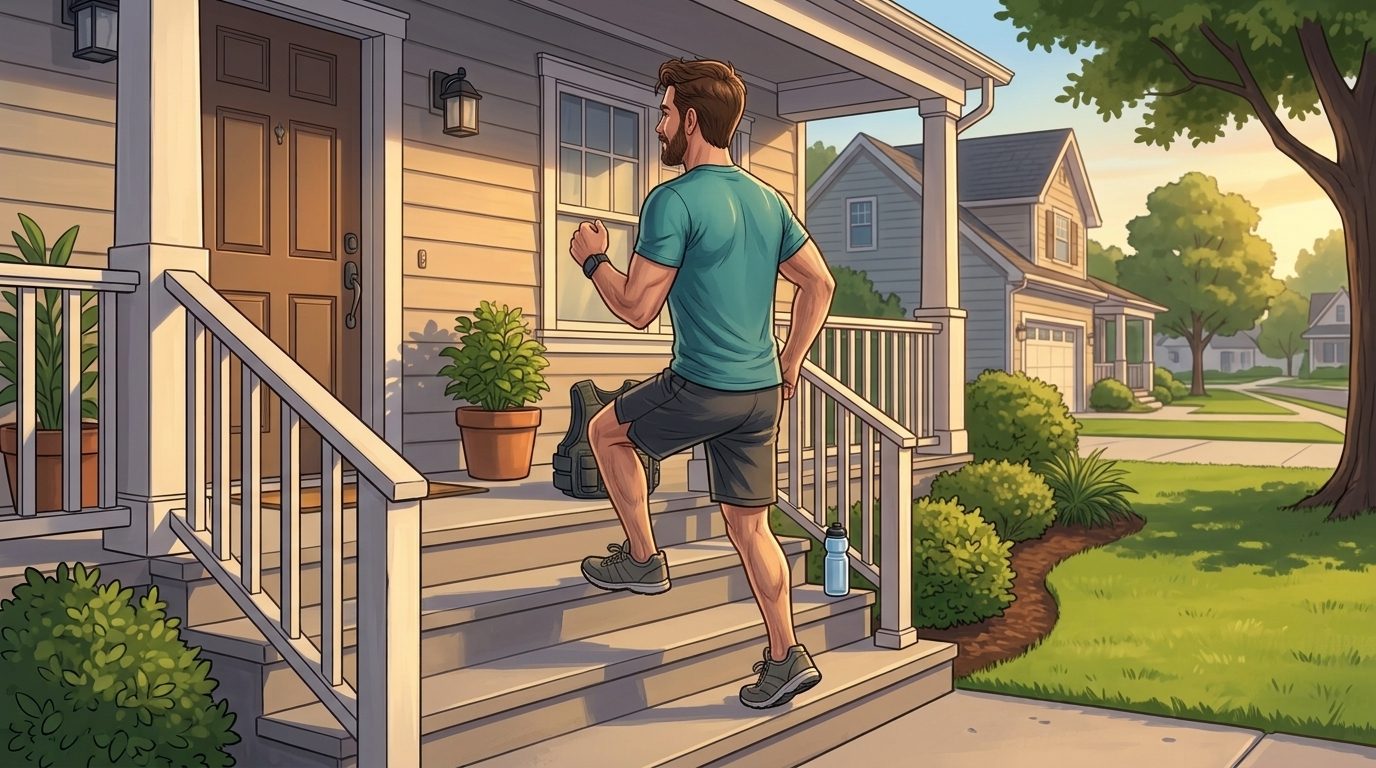
The safest way to do a step-up is on a low step, slowly, with something solid to hold on to. Here’s how I’d set it up:
- Pick your step. Use the bottom stair of a staircase with a railing. If you don’t have one, put a sturdy chair right next to a low step so you can hold the chair back.
- Hold on. Keep one or both hands on the railing or chair the whole time. There’s no prize for going hands-free.
- Place your whole foot on the step. Your heel shouldn’t hang off the edge.
- Push through the top leg. Press through the heel of the foot on the step and stand up tall. Try not to push off hard with the back foot.
- Step down slowly. Lower the other foot back to the floor with control. Going down is where people get sloppy.
- Switch legs. Do the same number on each side.
Easier and Harder Versions
The right version is the one you can do with good control and without fear. Start at the top of this table and move down only when it feels easy.
| Level | Setup | Good for |
|---|---|---|
| 1. Supported low step | A low step (a few inches) with both hands on a railing or chair | Anyone nervous about balance or just starting |
| 2. Bottom stair, railing | One normal stair, one hand on the railing | Most people after a few weeks of level 1 |
| 3. Bottom stair, light touch | Fingertips on the railing only for safety | People with good balance who want more challenge |
| 4. Added weight | Same stair, holding light dumbbells or wearing a weighted vest | Stronger lifters with no balance or joint issues |
I mostly stick to bodyweight. I’m at work most of the day, so wearing a vest isn’t practical there. At home I’ll sometimes add my weighted vest, but not often.
The Mistakes I See Most
The two biggest mistakes I see are using a step that’s too high and trying to do too much at first. People pick a tall box or the second stair, grind out a hard first session, decide step-ups are “too hard” and quit. Start lower and easier than you think you need to. You can always add more next week.
- Step too high. If your knee comes way above your hip, the step is too tall to start with.
- Too much, too soon. Finish your first few sessions feeling like you could have done more.
- Letting go of support. Keep a hand on the railing or chair, especially when you’re tired.
- Rushing the way down. Lower yourself slowly instead of dropping.
How I Fit Step-Ups Into a Busy Week
I do step-ups a few times a week on whatever stairs are in front of me. At work, that’s the stairs in my hallway. At home, it’s our staircase. I keep going until my legs feel weak, then I’m done.
I can tell my legs are stronger because step-ups are easier to do now than when I started. They pair well with my main habit, walking every day. If you’re just getting moving, start with my guide on how to start walking when you’re overweight, then add a few supported step-ups a couple of days a week.
My mom has stairs at her house that she uses, and I think anyone at any age should do step-ups if they’re able, or at least a modified version on a small step.
Do You Need a Step Platform?
No. A regular stair with a railing works great, and it’s what I use. A plastic aerobic step platform can help if you don’t have stairs, or if a full stair is too high to start with, because many of them adjust in height.
One option is the Amazon Basics Aerobic Exercise Step Platform, which has non-slip feet, stackable risers and a 400-pound weight limit. I haven’t tested this one myself. If you use a platform, set it against a wall and put a sturdy chair beside it for support.
Pros and Cons of Step-Ups for Seniors
| Pros | Cons |
|---|---|
| Trains real-life movements like stairs, curbs and getting into a car | Can be scary at first if your balance is shaky |
| Works each leg on its own and challenges balance | A step that’s too high can strain knees or hips |
| Needs no equipment beyond one stair | Not a fit for everyone with joint replacements or recent falls without a doctor’s OK |
| Easy to make easier or harder | Easy to overdo on day one |
Step-Ups for Seniors FAQ
Are step-ups safe for seniors?
Step-ups are safe for most seniors when you start on a low step and hold a railing or sturdy chair. If you have balance problems, a recent fall, osteoporosis or a joint replacement, check with your doctor or a physical therapist first.
How many step-ups should a senior do?
Start with just a few slow step-ups on each leg and stop well before your form breaks down. Aim for at least 2 days a week, which matches the CDC’s muscle-strengthening guideline for adults 65 and older, and add a few reps as it gets easier.
How high should the step be?
Start with a low step, a few inches high or the bottom stair, where you can stand up without leaning way forward or pushing off the back foot. Move higher only once the low step feels easy.
Are step-ups better than squats for seniors?
Step-ups aren’t better than squats, they’re different. Step-ups work one leg at a time and add balance, while chair stands and squats work both legs together. A good routine for older adults includes a mix of leg exercises.
Can you do step-ups with bad knees?
Many people with sore knees can do step-ups on a very low step with support, but stop if you feel sharp pain. A physical therapist can help you pick the right height and form for your knees.
Final Thoughts
If a friend over 65 asked me whether they should be doing step-ups, I’d tell them: if you’re able, yes. Try to do them, even if it’s on a small step with something to hold on to.
Start low, go slow, and let your legs get stronger week by week. Want to keep your eating simple too? Grab my free portion control cheat sheet or use my calorie calculator.