
Are Protein Bars Good for Weight Loss? What I Look For (2026)

Are protein bars good for weight loss? I think they can be, and I eat one almost every day. Usually it’s my snack after lunch, and it’s one of the easiest ways I’ve found to get more protein in without cooking anything. As a dad of 4 who works 2 jobs, easy matters.
But I see a lot of people treat protein bars like a “free” health food, and that’s where they get into trouble. Here’s how I use them, what I check on the label, why some bars upset people’s stomachs, and the 3 bars I actually buy.
Quick answer (updated October 2026): Are protein bars good for weight loss? They can be a good tool, but they won’t make you lose weight on their own. A bar with solid protein and low sugar can help you hit your protein goal and hold you over between meals. But bars range from about 150 to 300+ calories, so they can make you gain weight if you don’t count them. Read the label, because not every “protein” bar is high in protein.
Affiliate Disclosure: As an Amazon Associate, I earn from qualifying purchases. This means if you click on a link and make a purchase, I may receive a small commission at no extra cost to you.
Table of Contents
How I Use Protein Bars (Almost Every Day)
My routine is simple. I have a protein bar as a snack, usually after lunch. I don’t use them to replace meals. For me, a bar just isn’t enough calories to count as a whole meal. I use them to bump up my total protein for the day.
I track everything in Cronometer, and bars are the easiest thing to log. I just scan the barcode and move on. That’s the big reason bars work for me: I always count them. More on why that matters in a minute.
If you’re not sure how much protein you need in the first place, start with my post on how much protein I eat for weight loss.
Are Protein Bars Good for Weight Loss? What the Research Says
There’s no study showing that protein bars themselves melt fat. What the research does support is that protein helps with fullness, and that a high-protein snack can beat a typical high-fat snack for appetite.
In one small trial, 20 healthy women ate a 160-calorie afternoon snack 3 hours after lunch: either high-protein yogurt, crackers or chocolate. After the yogurt, they were less hungry than after the chocolate, waited about 30 minutes longer to ask for dinner, and ate about 100 fewer calories at dinner than after the chocolate (Ortinau et al., 2014). That study tested yogurt, not bars, and it was funded by General Mills (which makes yogurt), so take it as a good sign for high-protein snacks in general rather than proof for any bar.
The other side: protein bars are processed food. In a well-known NIH study, people on an ultra-processed diet ate about 500 more calories a day than on an unprocessed diet and gained about 2 pounds in 2 weeks (Hall et al., 2019). That’s a whole diet, not one bar a day. But it’s a good reason to treat bars as a tool, not the base of your diet. Most of my protein still comes from regular food.
Can Protein Bars Make You Gain Weight?
Yes, if you don’t count them. A protein bar has calories like any other food. The bars I eat range from 150 calories (David) to about 280 (Anabar). Two or three of the bigger bars a day on top of your normal meals can add 500+ calories without you feeling like you ate much.
That’s why I scan every bar into Cronometer. If you don’t know your daily calorie target yet, my free calorie calculator will give you a starting number in about a minute.
Not All “Protein” Bars Are the Same
The biggest mistake I see is assuming every protein bar is the same. The word “protein” is often used more for advertising than reality. Some bars have plenty of protein. Others are basically candy bars with a little protein added.
Here’s what I check on the label, in order:
- Calories: does it fit my day as a snack?
- Protein: how many grams am I actually getting for those calories?
- Sugar: I want it low.
- Taste: a big bonus. A bar I like is a bar I’ll actually stick with.
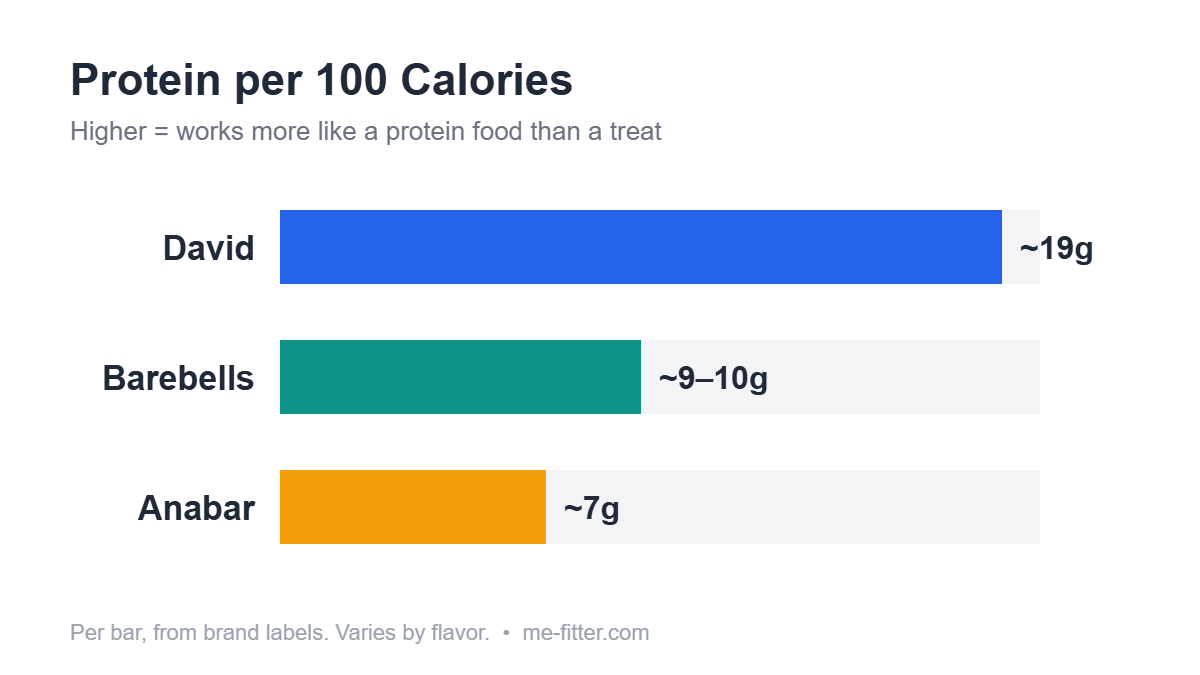
A quick way to compare bars: look at protein per 100 calories. David has about 19g of protein per 100 calories, Barebells about 9 to 10g, and Anabar about 7g. The higher that number, the more the bar works like a protein food instead of a treat.
What I skip: bars from sports drink brands or candy companies. In my experience they tend to have too much sugar, so check the label closely. I’ll eat a Quest bar in a pinch, but they taste like chemicals to me, so they’re not my first choice.
Why Do Protein Bars Cause Bloating or Gas?
This is one of the most searched protein bar questions. The usual cause is sugar alcohols like maltitol, sorbitol or erythritol. They add sweetness with fewer calories, but your body doesn’t fully absorb them, so they can cause gas, bloating or loose stools, especially in larger amounts. A review of the research found symptoms depend on the dose, and that people with IBS tend to react to smaller amounts (Lenhart & Chey, 2017). Added fibers can do the same thing for some people.
Two of my bars use maltitol. Barebells’ own nutrition page warns that too many may have a laxative effect. David uses maltitol plus allulose and a modified fat called EPG that your body mostly doesn’t absorb. Anabar uses real sugar and honey instead, with no sugar alcohols.
For what it’s worth, I eat a bar almost every day and I’ve never noticed any effect on my digestion. Everyone is different, though. If you’re new to these bars, start with one a day and see how you feel. If you have IBS or ongoing stomach issues, talk to your doctor. I also wrote about sweeteners in my post on diet soda and weight loss.
Protein Bar vs. Protein Shake, Greek Yogurt or Jerky
A protein bar isn’t the only easy protein snack. Here’s how I think about the most common swaps:
- Protein shake: usually more protein for fewer calories, but you have to mix it. See my protein powder picks.
- Greek yogurt: a great whole-food option if you have a fridge nearby.
- Beef jerky: high protein and portable, but watch the sodium.
- Candy bar: similar calories to some protein bars, but very little protein and a lot more sugar.
For more ideas, see my list of high-protein snacks.
Is a Protein Bar a Meal Replacement?
Not for me. Most bars are 150 to 300 calories, which isn’t enough for a full meal for most adults. If you replace lunch with a 150-calorie bar, you’ll probably be starving by mid-afternoon and make up for it later. I’d use a bar as a snack and build your meals around real food.
How Many Protein Bars a Day Is Too Many?
There’s no official limit. For most people, 1 a day is plenty. Past that, the calories add up fast, sugar alcohols can start to bother your stomach, and you’re crowding out whole foods that give you more fiber and nutrients.
The 3 Protein Bars I Actually Eat
These are the bars I buy myself. Numbers are per bar from each brand’s label and can vary by flavor, so check the flavor you buy.
| Bar | Calories | Protein | Sugar | Sweetened with | Best for |
|---|---|---|---|---|---|
| David | 150 | 28g (some flavors 20g) | 0g | Maltitol, allulose, sucralose | Most protein for the fewest calories |
| Barebells | 200–220 | 20g (soft bars 16g) | 1–2g | Maltitol | Great taste and easy to find |
| Anabar | About 280 | 20g | Higher (real sugar and honey) | Sugar and honey, no sugar alcohols | A treat-style bar without sugar alcohols |
David Protein Bars
David is my go-to when I want the most protein for the fewest calories: 28g of protein for 150 calories in most flavors. It uses maltitol and allulose instead of sugar.
Barebells Protein Bars
Barebells is one of my favorites for taste. It has 20g of protein, 1 to 2g of sugar and about 200 calories, and it’s easy to find in stores.
Anabar
Anabar tastes more like a candy bar than a protein bar. It’s higher in calories and sugar than the other two, so I treat it as the “dessert” option and count it carefully. It’s the pick if you want to avoid sugar alcohols and artificial sweeteners. It’s harder to find in stores. On Amazon it’s sold by a third-party seller, so check the seller before you buy.
Pros and Cons of Protein Bars for Weight Loss
Pros
- Easy, no-prep protein for busy days
- Easy to track (scan the barcode)
- A high-protein snack can help with afternoon hunger
- The good ones taste like dessert, which makes them easier to stick with
Cons
- Calories add up fast if you don’t count them
- Some “protein” bars are mostly sugar
- Sugar alcohols can cause gas or bloating in some people
- Processed food, and often more expensive per gram of protein than whole foods
Want simple ways to cut calories without counting every bite? Grab my free portion guide below.
FAQ
Are protein bars good for you?
The better ones can be a convenient source of protein. They’re still processed food, so I use them as a snack and get most of my protein from regular meals.
Can I eat a protein bar every day?
Yes, I do. One a day fits easily into most diets as long as you count the calories. If a bar gives you gas or bloating, try a different brand or one without sugar alcohols.
Is a protein bar good for breakfast?
It works in a pinch, but at 150 to 300 calories it’s a small breakfast. Pair it with something like fruit or Greek yogurt if you need it to hold you until lunch.
Should I eat a protein bar before or after a workout?
Either is fine. For weight loss, your total protein and calories for the day matter more than the exact timing.
Can I eat protein bars without working out?
Yes. Protein helps with fullness whether you work out or not. Just count the bar in your daily calories.
Are protein bars good for diabetics?
Some low-sugar bars can fit, but sweeteners and sugar alcohols affect people differently. If you have diabetes, check with your doctor or dietitian before adding them.
Final Thoughts
So, are protein bars good for weight loss? Like many things, they’re just a good tool. They aren’t going to make you lose weight, and they can make you gain weight if you don’t count them in your daily calories. Pick one with solid protein and low sugar, count it, and enjoy it.