
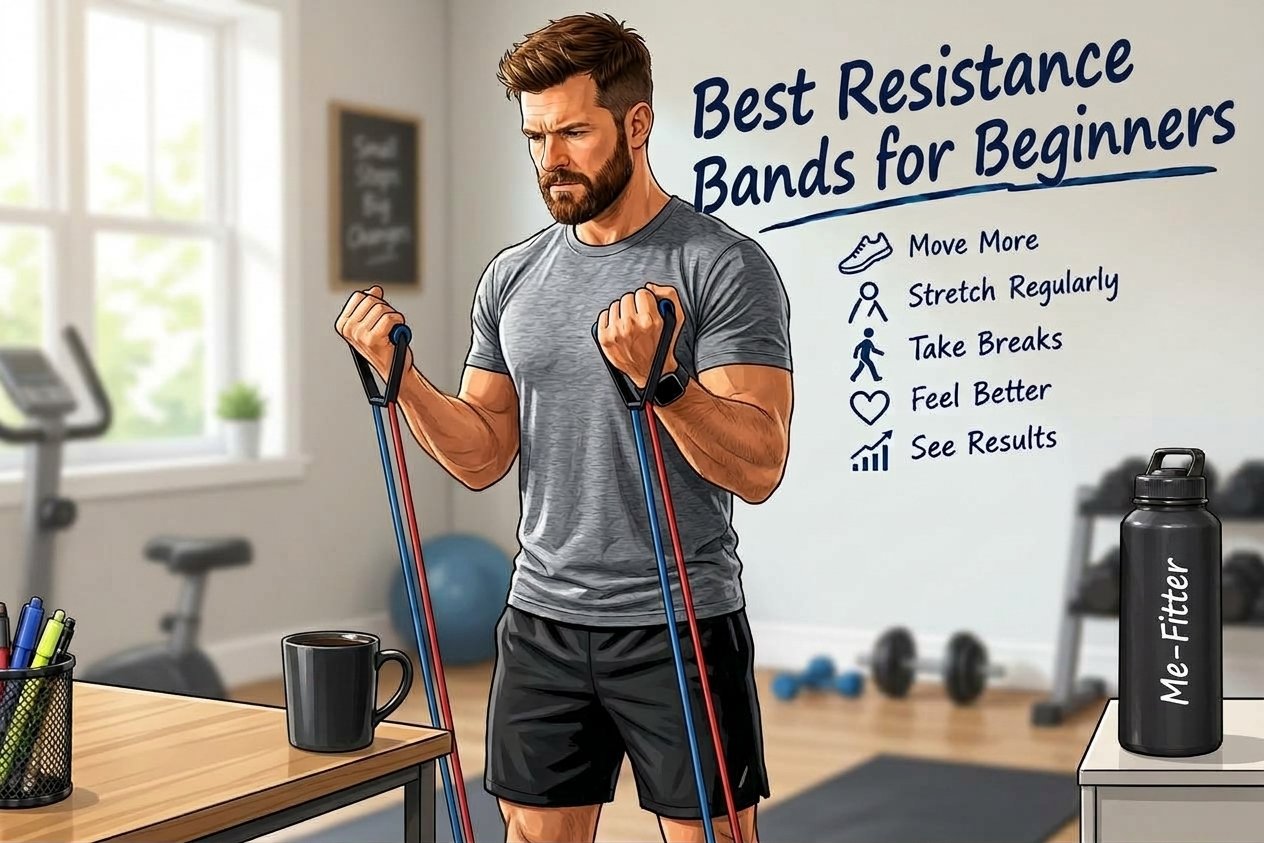
Best Resistance Bands for Beginners (2026): 4 Simple Picks From a Teacher Who Uses Them at Work
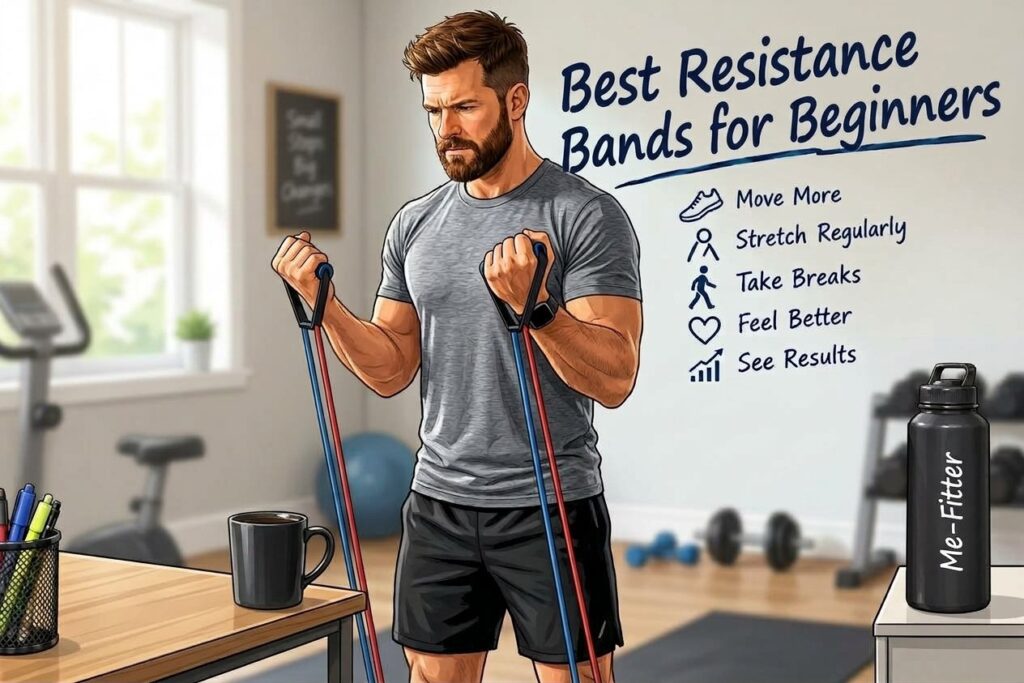
I keep a small bag of resistance bands at school and use them on my conference period for about 10 to 15 minutes. As a busy dad of four working two jobs, that’s some of the easiest strength training I get all week. They take a few seconds to set up, they don’t stress me out, and they go wherever I go.
I also lift dumbbells, kettlebells and a weighted vest at home, so bands aren’t my only tool. But they do things free weights can’t. Here’s which resistance bands I’d tell a beginner to buy, which type to start with, and how to use them without wasting money on bands that snap.
Quick answer (updated October 2026): The best resistance bands for beginners are a set of flat, color-coded loop bands. They’re sturdier and more versatile than tube bands with handles, and you can still do rows, curls and squats without handles getting in the way. My pick is the LEEKEY loop band set. If you want handles, get the Whatafit tube set. Whatever you buy, skip the cheapest no-name bands. I’ve had cheap ones snap on me.
Table of Contents
Best Resistance Bands for Beginners: Quick Picks
| Band | Type | Best for | Price check |
|---|---|---|---|
| LEEKEY Resistance Bands Set | Long flat loop bands, 5 levels | Best overall for beginners | Check price on Amazon |
| Whatafit Resistance Bands with Handles | Tube bands with handles, door anchor | Best if you want handles | Check price on Amazon |
| THERABAND Resistance Bands Set | Flat therapy bands (no loop) | Stretching, recovery and rehab | Check price on Amazon |
| Fit Simplify Resistance Loop Bands | Short mini loops, set of 5 | Budget pick for legs and glutes | Check price on Amazon |
Affiliate Disclosure: As an Amazon Associate, I earn from qualifying purchases. This means if you click on a link and make a purchase, I may receive a small commission at no extra cost to you.
What I Actually Use (and Where)
I own two kinds of bands:
- Long, flat, color-coded loop bands. Mine are the Athletic Works brand from Walmart. These are the ones I reach for most.
- Round tube bands with a handle on each side. I mainly use these for rows.
I keep them in a small bag and take them to work. On my conference period I spend 10 to 15 minutes doing basic resistance training, stretching and some recovery work. Nothing too stressful. My go-to moves are rows, bicep curls and squats.
I’ve also used bands to strengthen my ankle after a mild injury. That’s something a dumbbell can’t really help with.
Since my own bands came from Walmart, the Amazon picks in this post are similar bands, not the exact ones I own.
Flat Loop Bands vs. Tube Bands With Handles: Which Should a Beginner Buy?
If you can only buy one type, I’d get flat loop bands. In my experience they feel sturdier and they’re more versatile. You can still do rows without handles, and you don’t have handles getting in the way for other exercises like squats, stretches or leg work.
| Flat loop bands | Tube bands with handles | |
|---|---|---|
| Feel | Wide, flat, sturdy | Round tube, more like a cable machine |
| Versatility | Strength, stretching, assisted pull-ups, legs | Mostly upper body presses, rows and curls |
| Handles | None, you grip the band | Built in, comfortable for rows and presses |
| Needs a door anchor | No | Usually, for rows and chest presses |
| My pick for beginners | Yes | Good second set |
The 4 Best Resistance Bands for Beginners
1. LEEKEY Resistance Bands Set (Best Overall)
This is the same style as the flat loop bands I use every week: long, flat loops in different colors so you can tell the resistance levels apart at a glance. A set gives you light bands for curls and stretching and heavier ones for squats and rows. It’s a well-known, well-reviewed set, which matters because cheap no-name loops are the ones that tear.
2. Whatafit Resistance Bands With Handles (Best With Handles)
If you like the feel of handles, this is the type I use for rows. Tube sets like this usually come with handles, ankle straps and a door anchor, so you can do rows and chest presses at home or in a classroom. I’d still buy flat loops first, but this is a good second set.
3. THERABAND Resistance Bands Set (Best for Stretching and Recovery)
These are the long, flat sheet-style bands you see in physical therapy offices. They’re lighter and great for stretching, warm-ups and gentle recovery work like the ankle strengthening I did after my injury. They’re not the best choice for heavy squats or rows.
4. Fit Simplify Resistance Loop Bands (Budget Pick)
These are short mini loops that go around your thighs or ankles. They’re cheap, small enough for a desk drawer, and good for glute and leg warm-ups. They’re too short for most upper body work, so think of them as an add-on, not your main set.
Are Resistance Bands as Good as Weights?
For building strength, bands hold up better than most people think. A 2019 systematic review and meta-analysis found that training with elastic resistance produced similar strength gains to training with conventional weights and machines (Lopes et al., SAGE Open Medicine, 2019).
I don’t use bands instead of weights. I lift my dumbbells, kettlebells and weighted vest at home. But bands offer something free weights don’t: easy resistance anywhere, plus help with stretching and recovery. That’s why I think of them as a cheap add-on to a home gym, not a replacement. If you’re building one, here’s my simple home gym setup for weight loss.
A Simple Beginner Resistance Band Workout
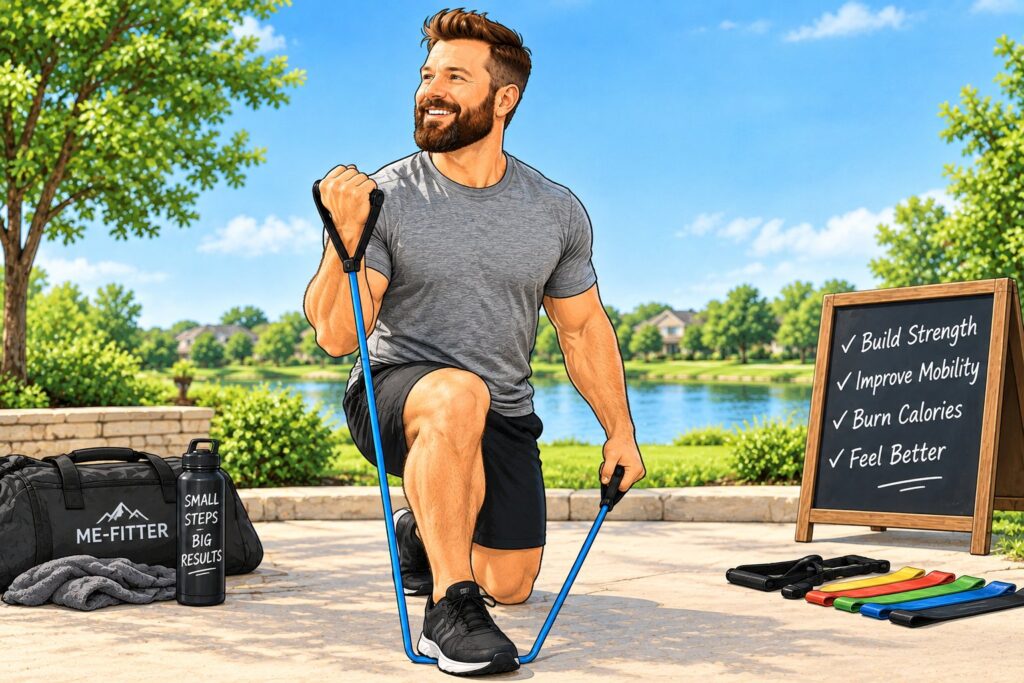
These are the three band exercises I do most. Together they work your back, arms and legs in about 10 to 15 minutes.
| Exercise | How to do it | Sets and reps to start |
|---|---|---|
| Band row | Anchor the band at chest height (door anchor or a sturdy post) or loop it around your feet while seated. Pull your elbows back and squeeze your shoulder blades together. | 2 to 3 sets of 12 to 15 |
| Bicep curl | Stand on the middle of the band, hold the ends (or handles) with palms up, and curl toward your shoulders without swinging. | 2 to 3 sets of 12 to 15 |
| Band squat | Stand on a loop band with feet shoulder-width apart and hold the top of the loop at your shoulders. Sit your hips back, then stand tall. | 2 to 3 sets of 10 to 15 |
Pick a band where the last few reps feel challenging but your form stays clean. When 15 reps feels easy, move up a color.
Using Resistance Bands for Stretching and Recovery
This is where bands beat weights for me. A light band can help you ease into hamstring and shoulder stretches, and it gives gentle resistance for strengthening small muscles after an injury, like I did with my ankle.
If you’re coming back from an injury, check with your doctor or a physical therapist before using bands for rehab so you’re doing the right exercises at the right level.
The Biggest Mistakes Beginners Make With Resistance Bands
- Buying cheap bands. I haven’t had a quality flat band snap, but I have had a cheap round band snap on me. I’ve also had a thin, cheap flat band snap, and it was old and rotted out.
- Using them improperly. Swinging, letting the band snap back, or anchoring it to something that isn’t sturdy is how people get hurt.
- Not checking for wear. Before each workout, look for nicks, thin spots, cracks or a sticky feel, and replace any band that has them.
- Storing them badly. Heat and sunlight break latex down faster, so keep bands in a bag out of a hot car.
Pros and Cons of Resistance Bands
| Pros | Cons |
|---|---|
| Cheap compared to weights | Hard to measure exact resistance |
| Small and easy to travel with | Cheap or old bands can snap |
| Sets up in seconds | Heavy leg work can outgrow light sets |
| Great for stretching and recovery | Tube bands often need a door anchor |
| Works for beginners and rehab | Latex can wear out over time |
Who Resistance Bands Are (and Aren’t) For
Bands are a great fit if you’re a beginner, short on time, training at work or while traveling, or need gentle strength and recovery work. If your main goal is lifting heavy, bands work best alongside dumbbells and kettlebells rather than replacing them.
If you sit a lot at work, bands make it easy to fit strength training into a break. Here’s how I stay active at a sedentary job as a teacher. And remember that for fat loss, food matters most. Find your numbers with my calorie calculator and keep meals simple with the free portion guide.
Want my routine on one printable page? Grab the free 10-Minute Resistance Band Workout: the band row, curl and squat with step-by-step form cues, a 4-week check-off plan and a band safety checklist.
Resistance Bands for Beginners FAQ
Are resistance bands good for beginners?
Yes. They’re cheap, easy to learn, and a meta-analysis found elastic resistance builds strength similar to weights. Start with a light-to-medium band and focus on clean form.
What resistance band should a beginner start with?
A set of flat loop bands with several resistance levels, so you can use light bands for curls and stretching and heavier ones for squats and rows. That’s the type I’d buy first.
Are loop bands or tube bands with handles better?
For most beginners, I prefer flat loop bands. They’re sturdier and more versatile, and you can still do rows without handles. Tube bands are nice if you want handles for presses and rows.
Can you build muscle with resistance bands?
Yes, especially as a beginner. Bands build strength when you train close to fatigue and move up in resistance as exercises get easier. Many people use them alongside dumbbells.
How do I know when to replace a resistance band?
Replace it if you see nicks, tears, thin spots or cracking, or if it feels sticky or brittle. Old bands can snap, which happened to me with a cheap one.
Are resistance bands worth it?
Absolutely. They’re a cheap addition to any home gym, they’re versatile, and they easily travel with you.
Final Thoughts
If a friend asked me whether resistance bands are worth it, I’d say absolutely. They’re a cheap addition to any home gym, they’re versatile, and they easily travel with you. Start with a quality set of flat loop bands, learn rows, curls and squats, and add handles or therapy bands later if you need them.




One Comment