
How Heavy Should a Weighted Vest Be? (Simple Chart by Body Weight)
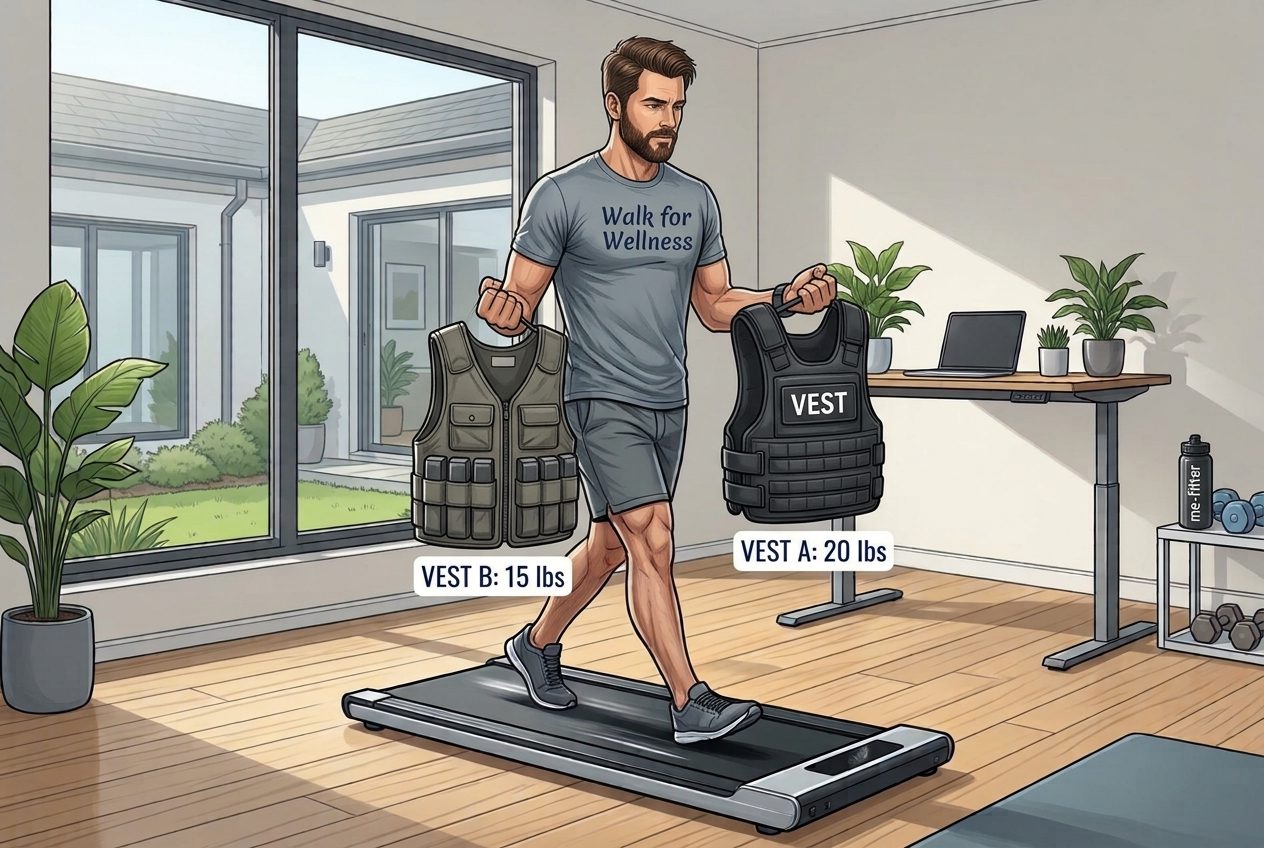
When I bought my first weighted vest, I had no idea how heavy it should be. I grabbed a cheap 10 lb vest from Five Below because it was there and it was cheap. I got lucky. At about 255 lbs, 10 lbs was the right place to start.
If you’re asking “how heavy should a weighted vest be?”, here’s the simple answer, a chart by body weight, and what I’d do differently if I were starting over.
Quick answer (updated November 2026): A weighted vest should start at about 5–10% of your body weight, closer to 5% if you’re new to exercise or have sore joints. As a certified nutrition coach who lost 50 lbs mostly by walking, I started with a 10 lb vest at 255 lbs and now walk with 12–15 lbs.
This post contains affiliate links. If you buy through them, I may earn a small commission at no extra cost to you. I only recommend things I’d tell a friend about.
Table of Contents
How Heavy Should a Weighted Vest Be? The 5–10% Rule
Start with a vest that weighs about 5–10% of your body weight. That’s the range you’ll see from most trainers and doctors, and it’s what worked for me.
UCLA Health’s sports medicine surgeon Dr. Sharon Hame suggests starting even lighter, at about 5% of your body weight, and building up slowly with an adjustable vest. In one of the biggest weighted vest studies so far, the INVEST trial (150 adults age 60–85), researchers capped the vest at 10% of each person’s starting body weight.
So think of 5% as your starting point and 10% as a reasonable ceiling for everyday walking. You don’t need to go heavier than that to get results.
Weighted Vest Weight Chart by Body Weight
Find your body weight, then start near the lower number. Move toward the higher number only after walks feel easy.
| Your body weight | Start here (about 5%) | Work up to (about 10%) |
|---|---|---|
| 120 lbs | 6 lbs | 12 lbs |
| 150 lbs | 7–8 lbs | 15 lbs |
| 170 lbs | 8–9 lbs | 17 lbs |
| 200 lbs | 10 lbs | 20 lbs |
| 225 lbs | 11 lbs | 22 lbs |
| 250 lbs | 12–13 lbs | 25 lbs |
| 300 lbs | 15 lbs | 30 lbs |
For me: 10 lbs at 255 lbs was about 4% of my body weight, a gentle start. Now at 215–225 lbs, my usual 12–15 lbs is about 5.5–7%. Right in the middle of the range.
How Heavy Should a Weighted Vest Be for Walking?
For walking, 5–10% of your body weight is plenty. Walking is my main exercise, and my usual vest walk is 20–30 minutes, or about 2 miles, with the vest on the whole time.
One thing surprised me in the research: on flat ground, a lighter vest doesn’t burn as many extra calories as people think. In a small study for the American Council on Exercise (13 women walking at 2.5 mph), a vest at 10% of body weight on a flat treadmill only raised calories burned by about 3%, which wasn’t a meaningful difference. Adding an incline made a bigger difference: with the same 10% vest, calories went up about 9% compared with walking that incline without a vest.
That’s why I don’t chase heavier weight. If you want more out of your walk, adding a hill, a little more pace or a few more minutes is safer than piling on pounds. Use the Me-Fitter calorie calculator to see where your calories actually stand.
For more on routes, pace and form, see my full guide to walking with a weighted vest.
How Heavy Should a Weighted Vest Be for Women?
Women can use the same 5–10% rule. A 140 lb woman would start around 7 lbs and work up to about 14 lbs.
Many women buy a vest for bone health, especially around menopause. The research there is mixed. In the INVEST trial, older adults who wore a vest while losing weight still lost about the same amount of hip bone density as those who didn’t. Vests may still help with strength and balance, but they aren’t a fix on their own. If you have osteoporosis or osteopenia, talk with your doctor before you start. My post on weighted vests and osteoporosis covers this in more detail.
How Much Weight Should You Start With?
Start at the low end, around 5% of your body weight or a little under. It’s always easier to add weight than to recover from doing too much.
My first walks with the 10 lb vest weren’t as hard as I expected. My feet and knees were a bit more sore than usual, not hurt, just sore. That’s normal. Pain that’s sharp, or that doesn’t go away, is a sign to drop the weight or take a break.
If you aren’t walking regularly yet, UCLA Health suggests a few weeks of walking without a vest first. Then make your first weighted walks less than half as long as your normal walk.
When (and How Much) to Add Weight
Add weight when your walks start to feel normal again. For me, that meant the vest didn’t feel like a vest anymore, and then I’d add about 3–5 lbs.
If you’re smaller than I am, or newer to exercise, a 1–2 lb jump is gentler. 3–5 lbs is a bigger percentage of a 140 lb person than a 250 lb person. And you don’t always have to add weight. Walking a little farther, a little faster or up a hill works too.
Once I find a weight that works, I mostly stick with it. My vest uses sandbags, and I’m a creature of habit, so I don’t swap weights for every walk. A vest with quick, solid weights makes changing easier if you like to adjust for hills or hot days.
12 lb or 16 lb? Is 20 or 25 lb Too Heavy?
Pick the size that’s closest to 5–10% of your body weight. Here’s how the common sizes work out:
- 12 lb vest: a good fit for most people from about 120 to 240 lbs.
- 16 lb vest: better for about 160 lbs and up. Under that, it’s more than 10% of your body weight.
- 20 lb vest: about 10% for a 200 lb person. A fine goal, but a heavy start for most beginners.
- 25 lb vest: 10% of 250 lbs. Too heavy for most people to start with, and more than you need for everyday walking.
If you can’t decide between two sizes, that’s the best reason to buy an adjustable vest. My vest can go above 20 lbs if I add more sand, but I walk at 12–15.
Mistakes to Avoid
The two mistakes I see most are starting too heavy and buying a vest that’s uncomfortable.
- Starting too heavy. A 20 or 30 lb vest on day one feels motivating until your feet, knees or back complain. Start light and earn the heavier weight.
- Buying an uncomfortable vest. Scratchy shoulder straps make you not want to put it on. If it rubs on a short walk, it’ll be worse on a long one.
- Ignoring your joints. If you have back or neck problems, or arthritis in your hips, knees or ankles, check with your doctor first. Extra weight can make those worse.
For more on safety, read is a weighted vest safe?
A Budget Adjustable Vest to Start With
If you’re buying your first vest, get an adjustable one. You can start light and add weight as you go, instead of buying a second vest later.
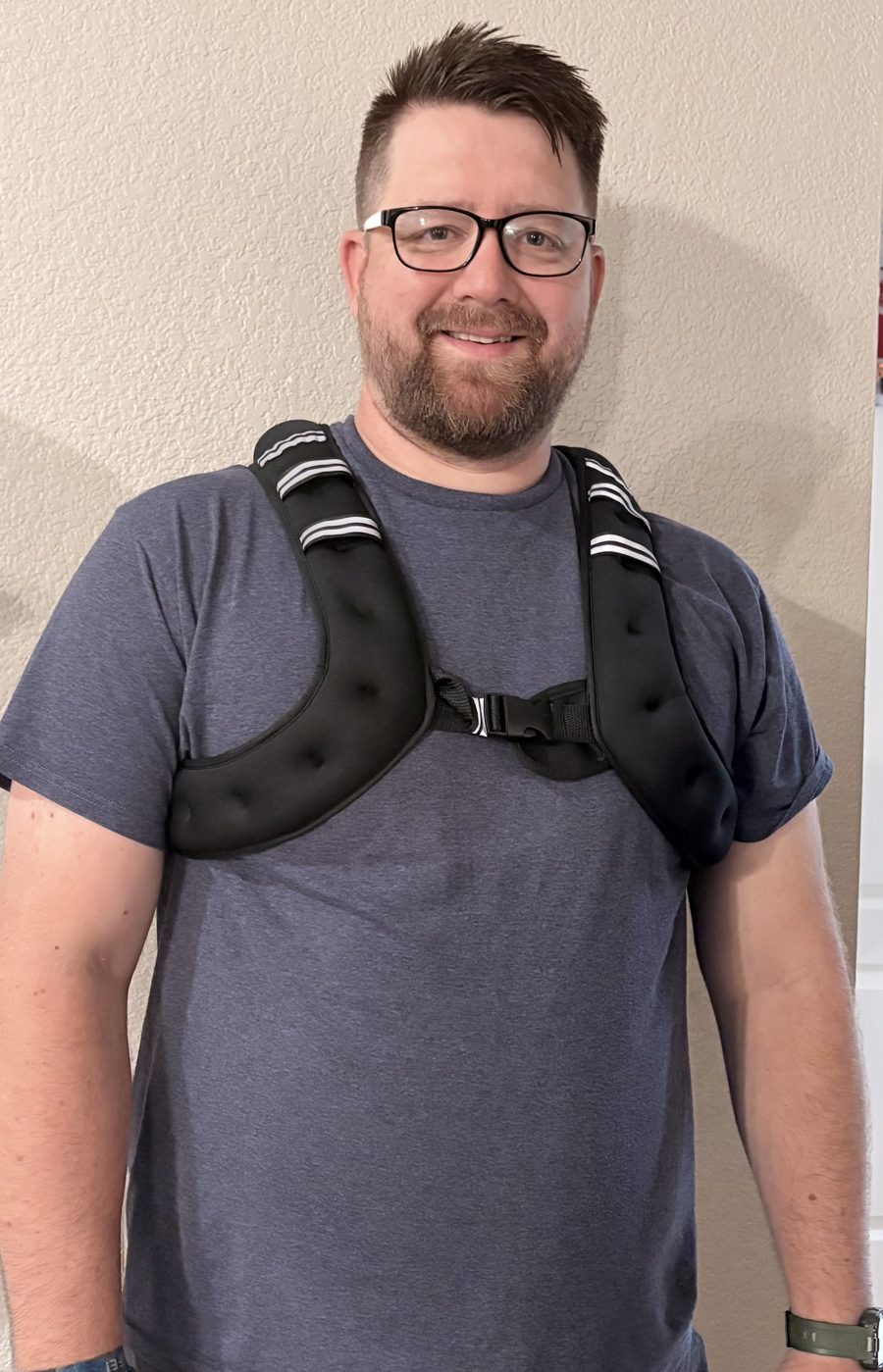
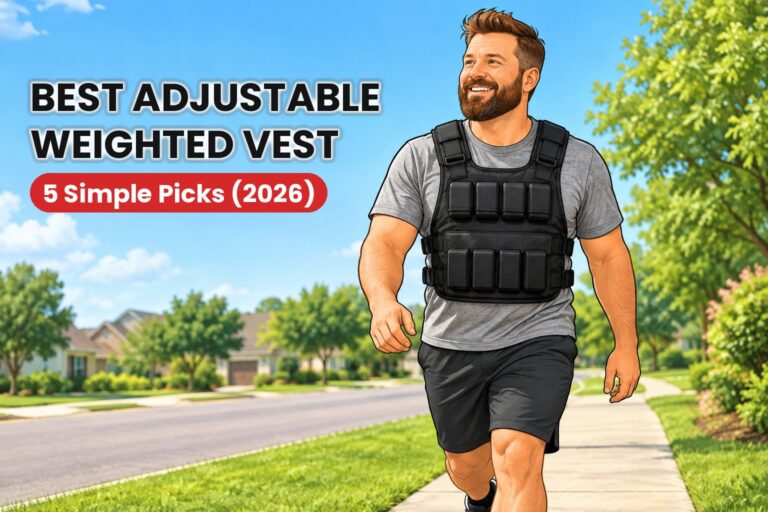
I own two vests: an adjustable sandbag vest from Temu, and the fixed-weight ZELUS Weighted Vest in the photo above. The ZELUS is comfortable, but you can’t change its weight. That’s why, for a first vest, I’d point you to the ZELUS Adjustable Weighted Vest. I haven’t worn the adjustable version myself, but it works the same way as my Temu vest: six removable iron-sand bags, sold in 4–10, 11–20 and 20–32 lb versions. For most beginners, the 4–10 or 11–20 lb version covers the whole 5–10% range.
Check the price of the ZELUS Adjustable Vest on Amazon
Want more options? See my picks for the best adjustable weighted vests.
Want a simple plan? Grab my free weighted vest walking plan below.
FAQ
How heavy should a weighted vest be if I weigh 170 lbs?
At 170 lbs, start with about 8–9 lbs and work up to about 17 lbs. An 8 or 10 lb vest, or an adjustable 4–10 lb vest, is a good first choice.
Is a 20 lb weighted vest too heavy for walking?
A 20 lb vest is too heavy to start with for most people under 200 lbs. It’s about 10% of a 200 lb person’s body weight, so it’s a reasonable goal to build up to, not a first vest.
Is a 25 lb weighted vest too heavy?
For most people, yes. 25 lbs is 10% of a 250 lb person, so it’s the upper limit even for bigger walkers, and too much to start with.
Should I get a 12 lb or 16 lb weighted vest?
Get the 12 lb vest if you weigh under about 160 lbs or you’re new to vest walking. Get the 16 lb vest if you weigh more than 160 lbs and already walk regularly. If you’re unsure, an adjustable vest lets you have both.
How long should I wear a weighted vest when walking?
Start with short walks, less than half your normal distance, and build up. My usual vest walk is 20–30 minutes or about 2 miles, and I wear the vest the whole time.
Final Thoughts
If a friend asked me how heavy their weighted vest should be, I’d tell them to buy an adjustable one and start at 5–10% of their body weight. Start light, add weight when it feels normal, and let your walks do the work.



3 Comments