
Best Food Scale for Weight Loss (2026): My Pick After 4 Years
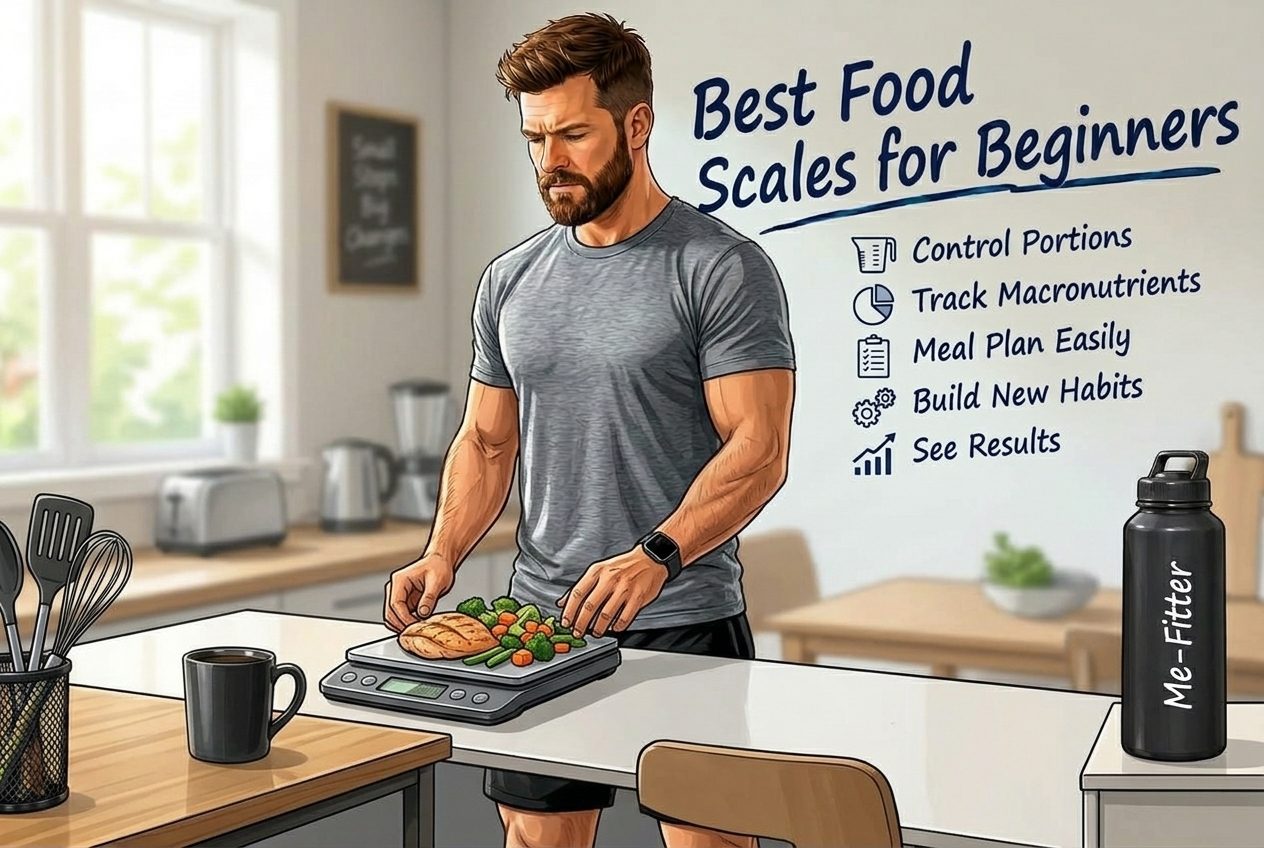
When I started losing weight, I thought I had a pretty good idea of how much I was eating. Then I started putting my food on a scale. Rice and cheese were the big surprises. I was eating more calories than I thought, for sure.
Quick answer (updated October 2026): The best food scale for weight loss is a cheap digital scale that weighs in grams and has a tare (zero) button. As a certified nutrition coach who lost 50 lbs, I have used a basic BAGAIL scale for about four years. You do not need a pricey smart scale with an app.
As an Amazon Associate, I earn from qualifying purchases. If you buy through my links, I may earn a small commission at no extra cost to you. I will always tell you when I have not tested something myself.
Table of Contents
Do You Need a Food Scale to Lose Weight?
You do not need a food scale to lose weight, but if you count calories, it is the most accurate way to know what you are actually eating.
Most people guess, and guesses tend to run low. In a well-known study in the New England Journal of Medicine, people who said they could not lose weight on a low-calorie diet under-reported what they ate by an average of 47% (Lichtman et al., 1992). A 2021 review of 59 weight-loss studies found that tracking what you eat generally supported weight loss (Raber et al., Public Health Nutrition).
Here is how I explain it: the box tells you the calories for a certain number of grams. If you do not use grams to measure, your calories will be off. Many people guess and end up way off.
Best Food Scale for Weight Loss: The BAGAIL I Have Used for 4 Years
My pick is the BAGAIL digital kitchen scale. I bought mine on Amazon about four years ago, and it has worked great. I still weigh my food whenever I cook at home.
Mine is an older version: a flat, square stainless steel scale. The current model also comes with a stainless steel bowl. Here is what the current listing includes:
- Weighs up to 11 lb (5 kg) in 1-gram steps
- Tare button to zero out your plate or bowl
- Grams, ounces, milliliters and more (7 units), so it handles liquids like water and milk too
- Backlit display, batteries included
One quirk: it shows decimals only in ounce mode, and the maker recommends at least 3 to 5 grams on the scale for an accurate reading. For weight loss, whole grams are plenty.
Two Cheap Alternatives (I Have Not Tested These)
If my pick is out of stock, a basic scale with grams and a tare button will do the same job. I have not used these two myself, but they have the basics I would look for, and each has well over 100,000 Amazon reviews.
- Etekcity Food Kitchen Scale: about $11, flat stainless steel top, 1-gram steps, up to 11 lb. This is the one that looks most like mine.
- Amazon Basics Digital Kitchen Scale: about $11, stainless steel platform, weighs from 2 grams up to 11 lb.
Check Etekcity price Check Amazon Basics price
| Scale | Price (Oct 2026) | Max weight | Smallest step | Bowl | Have I used it? |
|---|---|---|---|---|---|
| BAGAIL | $29.99 | 11 lb / 5 kg | 1 g | Yes (current model) | Yes, older model, 4 years |
| Etekcity | $10.99 | 11 lb / 5 kg | 1 g | No | No |
| Amazon Basics | $11.14 | 11 lb / 5 kg | Not listed (2 g minimum) | No | No |
Is a Smart Food Scale Worth It?
For most people, no. A basic scale is more than enough. Smart scales that sync with an app can save a few taps, but you do not need all the bells and whistles unless you are feeling “rich” and “bougie.” I just type the grams into Cronometer myself.
What Surprised Me When I Started Weighing Food
Rice and cheese surprised me the most. Both are easy to over-serve without noticing.
Cooked white rice has about 130 calories per 100 grams, and cheddar cheese has about 400 calories per 100 grams (USDA FoodData Central). An extra scoop of rice or handful of shredded cheese adds up fast, and you will not know how much until you weigh it.
How I Use a Food Scale (Busy Dad Version)
Put a bowl or plate on the scale, press tare to zero it out, and weigh each ingredient as you add it.
- Set your bowl or plate on the scale and press tare.
- Add a food and note the grams.
- Press tare again before the next food so each one starts at zero.
- Log the grams in your tracking app. I use Cronometer.
I mainly do this when I cook for myself, or for my wife and me. With four kids, I do not weigh food for them. I measure most things in grams, and I weigh liquids as well as solids.
Why Grams Beat Cups (and the Serving Size on the Box)
Grams are more accurate because nutrition labels list calories for a weight in grams, while a cup or scoop is a guess.
How full you pack a cup or how big your scoop is changes how much food you are really eating. A scale takes the guesswork out. One tip: weigh food the same way your app entry lists it. If the entry is for cooked rice, weigh it cooked. If it is for dry rice, weigh it dry.
If you want the bigger picture on calories, see my calorie deficit and macros guide.
The Biggest Food Scale Mistake I See
The biggest mistake is seeing the scale as a ridiculous extra step and only using it for big items. I measure everything with it, liquids and solids.
Small things count. One tablespoon of olive oil has about 120 calories (USDA), so the oil in the pan matters too.
When I Use My Hand Instead of a Scale
When I am traveling, in a hurry, or cooking for the whole family, I use hand portions instead. Measuring for six people can be a lot.
I explain how in my hand portion guide, and you can grab my free portion guide to keep on your fridge. If you would rather pre-portion meals, see my portion control containers picks.
Food Scale FAQ
Do I need a food scale to lose weight?
No. Many people lose weight without one. But if you track calories, a scale is the most accurate way to know your portions, because guessing usually comes in low.
Should I weigh food raw or cooked?
Either works, as long as you match the entry in your tracking app. Cooked rice and dry rice have very different calories per gram, so pick the right entry.
Is a cheap food scale accurate enough?
Yes. For weight loss, a basic scale that reads in 1-gram steps is accurate enough. I have used an inexpensive one for four years.
Should I weigh food in grams or ounces?
Grams. They are a smaller unit than ounces, and nutrition labels list serving sizes in grams, so the math is easier.
Can I weigh liquids on a food scale?
Yes. Many scales have a milliliter mode for liquids like water and milk, and I weigh liquids as well as solid foods.
Final Thoughts
My advice: get a cheap one and use it for all meals that you do not have exact measurements for. You do not need anything fancy. If you do not know your calorie target yet, start with my free calorie calculator.



One Comment